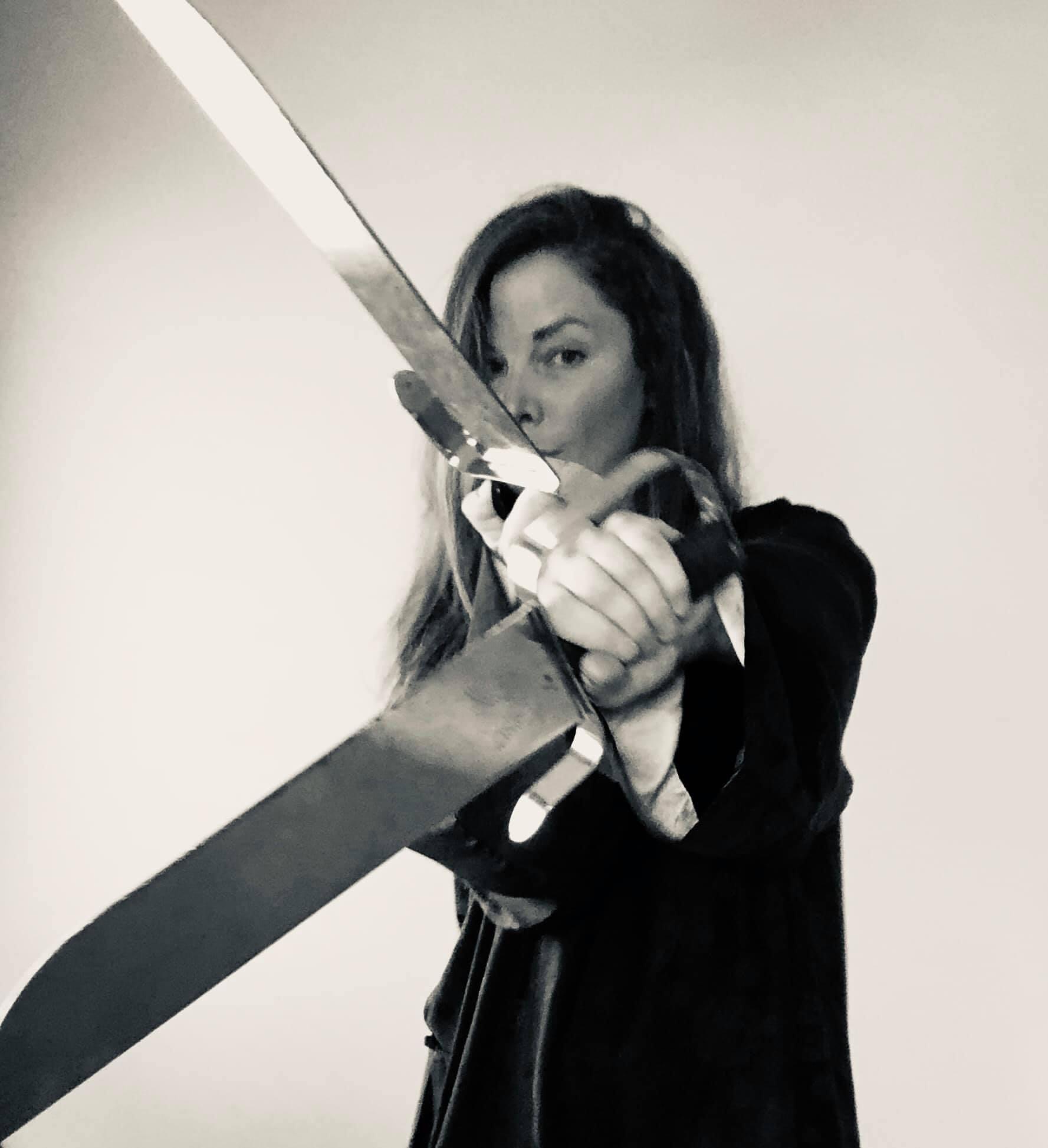
The answers are grouped into five sections: getting started, training, the forms and weapons, lineage and history, and online learning. Tap any question to open it. Where Wing Chun lineages do things differently, I say so; the details here follow the Traditional Wing Chun I teach.
Jump to: Getting started · Training · Forms and weapons · Lineage and history · Online learning
Getting started
What is Wing Chun?
Wing Chun is a Southern Chinese martial art built for close-range self-defense. It is known for efficiency and directness: protecting and attacking along the centreline, using structure rather than strength, and defending and striking at the same time. Start with Wing Chun principles or my post What is Wing Chun?
Is Wing Chun hard to learn?
It is not unusually hard to begin, because the curriculum is compact and logical and starts from simple positions. The challenge is refinement: relaxed structure and sensitivity take years to deepen. Read Is Wing Chun hard to learn? and avoid the usual pitfalls with common beginner mistakes.
Do I need to be fit or flexible to start?
No. Wing Chun has no high kicks, jumps or rolls, and the early training is low-impact. Your fitness improves as you practise. If you want to build it deliberately, see conditioning for Wing Chun.
Am I too old to start Wing Chun?
Very rarely. Wing Chun relies on structure, patience and relaxation more than speed or flexibility, so many people start in their 50s, 60s and later. Check with your doctor first if you have health concerns, then read Wing Chun for older adults.
Is Wing Chun good for women?
Yes. The art was designed so a smaller person could deal with a larger, stronger one through structure, angles and sensitivity. See Wing Chun for women for training tips and self-defense awareness.
Can children learn Wing Chun?
Yes. Many instructors start children at around seven or eight, when they have enough focus for structured training. The foundation is non-contact, and it builds focus, discipline and confidence. My post on Wing Chun for kids has more.
Is Wing Chun good for self-defense?
Wing Chun was designed for close-range, real-world situations rather than sport, and it relies on structure rather than size. Like any art, it works best when trained consistently and pressure-tested with partners. Its main gap is ground fighting, so some basic awareness there is useful. See Wing Chun for self-defense.
What should I wear to train?
Comfortable clothing you can move freely in, and flat, thin-soled shoes or bare feet on a safe floor. Many schools use a kung fu uniform and sash, but you do not need one to begin. See what to wear for Wing Chun.
What equipment do I need to start?
Almost nothing: a clear space, a mirror and a phone to film yourself. A wall bag usually comes a few months in, and a wooden dummy much later. The gear guides and home training setup explain what to add and when.
Training
How often should I practise?
Little and often beats long and rare. For beginners I suggest around 20 to 30 minutes on at least five days a week, built around your current form. The daily practice routine lesson gives a ready-made structure.
How long does it take to learn Wing Chun?
It depends on how much you practise and how you are taught. With focused daily practice, the foundations come within months, and in my post on how long it takes to learn Wing Chun I explain how I lay out the full system. Refining it continues for a lifetime.
What is the basic Wing Chun stance?
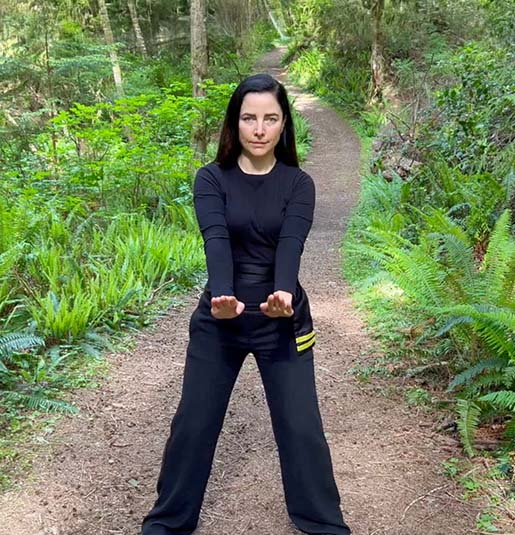
The training stance is upright, with the knees softly bent, the spine tall, the shoulders relaxed and the weight even. In Traditional Wing Chun the feet are not turned in, and when we move we step on angles. Details vary between lineages; my post on Wing Chun stances explains how I teach it.
What is centreline theory?
The centreline is the imaginary line down the middle of the body, where many vulnerable targets sit. Wing Chun protects your own centreline and attacks along your opponent’s, using the shortest, most direct paths. The centreline theory lesson covers it step by step.
What is a chain punch?
The Wing Chun punch is a short, straight, vertical-fist punch thrown along the centreline with the elbow down. Chain punching links punches in rapid succession, one hand following the other. Learn the mechanics in the Wing Chun punch lesson.
What are Tan Sao, Bong Sao and Pak Sao?
They are core Wing Chun hand techniques. Tan Sao is a palm-up deflecting hand, Bong Sao a rolling, wing-shaped arm position, and Pak Sao a slapping parry. See Wing Chun hand techniques for these and Fook Sao, Lop Sao, Jum Sao and Kwan Sao.
Does Wing Chun have kicks?
Yes. Wing Chun kicks are low, aimed at targets such as the knee, shin and ankle, because high kicks compromise balance and are slower at close range. They are introduced with the stepping and turning of Chum Kiu. See Wing Chun kicks.
What is Chi Sao?
Chi Sao, or sticking hands, is a partner drill where two people keep their forearms in contact and roll, feeling for openings and changes in pressure. It develops sensitivity, reflexes and structure under contact. Read Chi Sao explained.
Can I train Wing Chun without a partner?
Yes, for a long time. The forms, stance, footwork, punching, hand technique drills and dummy work are all solo practice. A partner becomes important for Chi Sao and applications; see partner drills and my post on training without a partner.
How should I condition my body for Wing Chun?
Build stance endurance, forearm and grip strength, core strength, mobility and stamina gradually, always in service of good structure. Never toughen your arms by hitting hard objects. The conditioning lesson includes a weekly plan.
Forms and weapons
What are the forms of Wing Chun?
Wing Chun has three empty-hand forms, Sil Lim Tao, Chum Kiu and Biu Jee, followed by the wooden dummy form (Muk Yan Jong) and two weapon forms: the long pole (Luk Dim Boon Gwun) and the butterfly swords (Baat Jaam Dao). The Learn hub lays them out in order.
What is Sil Lim Tao?
Sil Lim Tao is the first form. It is practised standing in place and builds structure, relaxation, the centreline and the basic hand positions that everything later depends on. Start with the Sil Lim Tao practice guide.
How long does it take to learn Sil Lim Tao?
Most beginners can learn the sequence in a few weeks of regular practice. Doing it well, with correct structure and genuine relaxation, takes much longer, and experienced practitioners keep refining it for their whole training life. My post on Sil Lim Tao goes deeper.
What is Chum Kiu?
Chum Kiu, often translated as seeking the bridge, is the second form. It adds turning, stepping and kicking, and teaches the whole body to move as one unit while keeping structure. See the Chum Kiu practice guide.
What is Biu Jee?
Biu Jee, meaning thrusting fingers, is the third empty-hand form. It is often called the emergency form because it teaches ways to recover when your structure or position has been compromised. Read the Biu Jee practice guide.
Do I need a wooden dummy?
Not as a beginner. The dummy becomes useful once you are learning the dummy form and want solid contact for angles, distance and footwork. Read the wooden dummy guide, or train the form without one using these methods.
What are the butterfly swords?
The butterfly swords, Baat Jaam Dao (also written Bart Cham Dao), are a pair of short, single-edged swords used together. Training them sharpens wrist strength, footwork and precision. Check the laws where you live before buying any blade; see the butterfly swords guide.
What is the long pole?
The long pole form is Luk Dim Boon Gwun, the six-and-a-half-point pole. It develops rooting, whole-body power and forearm and grip strength at long range. The long pole guide covers choosing a pole and training space.
When are the weapons taught?
The weapons come after the empty-hand forms, once structure and footwork are solid, because they extend what you have already learned. The exact order and timing differ between lineages and schools. Ask your teacher where they sit in your curriculum.
Lineage and history
Where did Wing Chun come from?
Wing Chun comes from Southern China. According to tradition, it was created by the Shaolin nun Ng Mui and passed to a young woman named Yim Wing Chun, whose name it carries. The history of Wing Chun lesson tells the story.
Who was Ip Man?
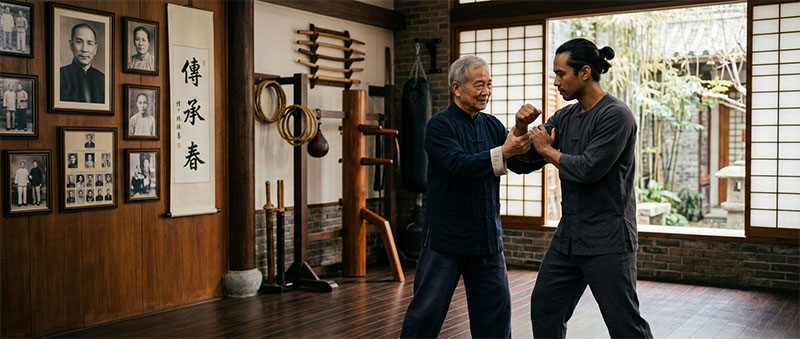
Grandmaster Ip Man was the teacher who brought Wing Chun to a wide audience from Hong Kong, and his students spread it around the world. Most Wing Chun taught today traces back to him. Read the Ip Man biography and my post Ip Man, the man who taught Bruce Lee.
What is Traditional Wing Chun?
There are two distinct lines from Grandmaster William Cheung’s teaching: some schools teach mainstream Wing Chun, others teach Traditional Wing Chun. In Traditional Wing Chun the feet are not turned in, and students step on angles to move off the line of attack. My post on Traditional versus mainstream Wing Chun explains the differences.
What lineage do you teach?
I teach Traditional Wing Chun as it was passed down to me by Master Brian Lewadny, who learned it from Grandmaster William Cheung, a student of Ip Man. That makes me 3rd generation Ip Man lineage. You can read more about me.
Why does lineage matter?
Lineage tells you where your teacher’s knowledge came from and lets you trace it back through real teachers. It is a good sign, but not a guarantee: teaching ability matters too. See why Wing Chun lineage matters and the lineages guide.
What do the sash colours mean?
It depends on the lineage, because Wing Chun has no single ranking system. In Traditional Wing Chun, a black sash with gold bars marks Levels 1 to 9, a gold sash marks Level 10 (instructor), a red sash marks an advanced instructor, and a purple sash marks Master Level. See ranks and levels.
How do I check a teacher’s lineage?
Ask who they trained under, for how long and where that line traces back to. A good teacher answers clearly and without fuss. Then look at how they teach, using the questions in what makes a good Wing Chun course.
Online learning
Can Wing Chun be learned online?
Yes, with a structured curriculum and a way to get feedback. The forms, stance, footwork and hand techniques train well at home; partner skills need a partner of some kind. Learning Wing Chun online explains what works and what to add.
Can I learn Wing Chun without a Sifu?
You can learn from a Sifu who is not in the room, but random self-study rarely works well. What you need is qualified instruction, a complete curriculum and correction of your technique. Read Can Wing Chun be learned without a Sifu?
Can I learn Chi Sao online?
You can learn the shapes, rolling patterns and principles online, and build much of the underlying skill with solo drills and the dummy. Real sensitivity is refined through contact, so add a partner when you can, even a beginner. See Can you learn Chi Sao online?
How do I choose an online course?
Look for a clear lineage, a structured curriculum with defined levels, a way to have your technique checked, and an end point rather than an open-ended subscription. Our course checklist walks through the questions to ask before you pay.
Can I get certified online?
Some online programmes offer graded levels and certification based on recorded or live assessment. My own online certification course has 10 levels, each with a graded exam. Whatever you choose, check what each certificate actually requires.
Where to start
- Read Wing Chun principles to understand the ideas behind everything else.
- Learn your stance and begin the Sil Lim Tao practice guide.
- Set up a short daily practice routine and stick to it for 30 days.
Next: beginner mistakes · Wing Chun philosophy · all lessons