The short answer
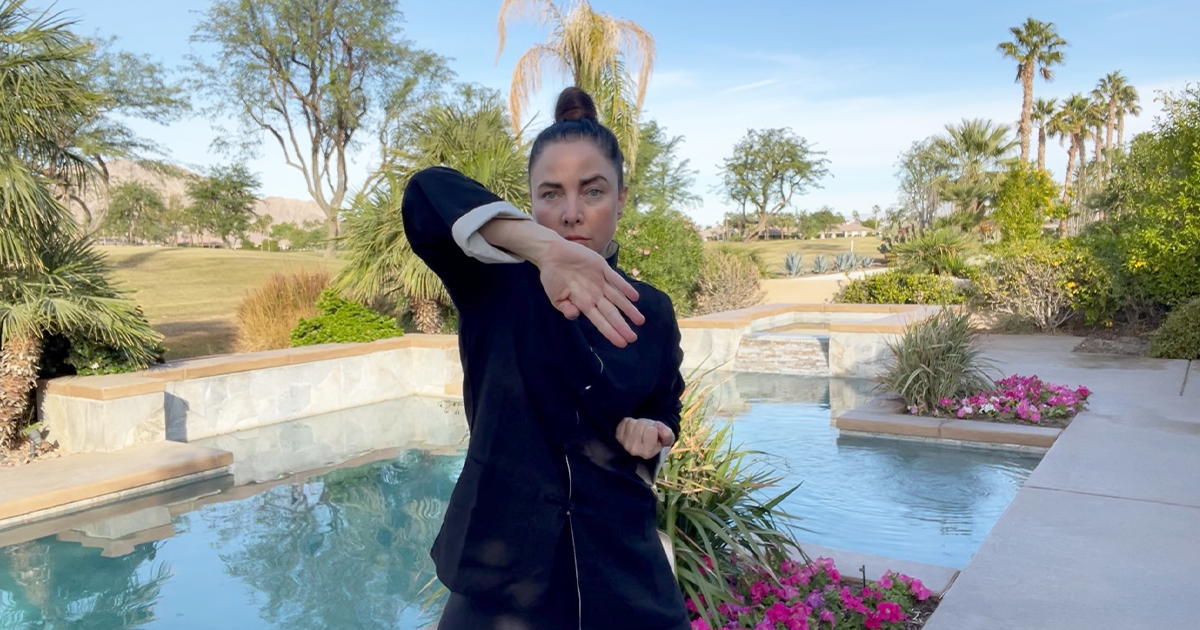
You can learn and drill the wooden dummy form without owning a dummy. Air practice builds the footwork, sequencing, structure and timing of the form. It cannot give you conditioning or the feel of your arms meeting resistance, so add contact work when you can.
Why train without a physical dummy?
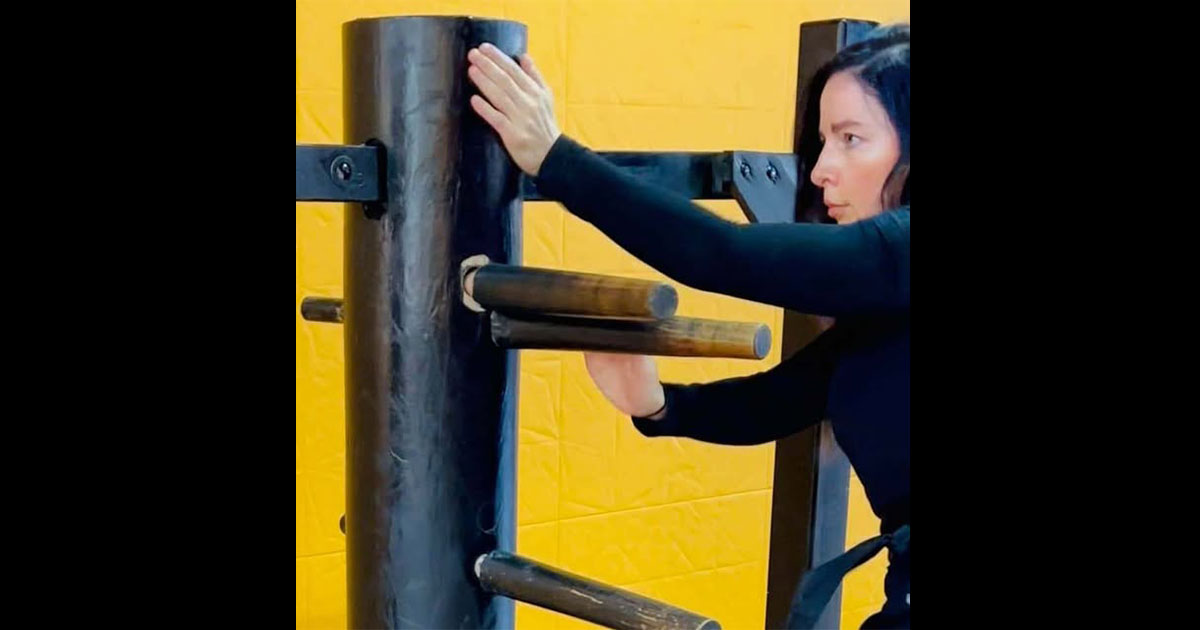
The wooden dummy is Wing Chun's best-known training tool, and one of the hardest to own. A good dummy is a significant purchase, it is heavy, it needs secure mounting, and it is often impractical in apartments or shared homes. Our wooden dummy buyer's guide covers what owning one involves.
Many students, and online students especially, reach the dummy form before they have the equipment. Waiting could mean putting the form off for years. The better option is to learn and drill it in the air now, and add the dummy later. For the wider picture of training at home, see learning Wing Chun online.
What air dummy training develops
Footwork precision
The stepping patterns of the dummy form, the pivots, forward steps and angle changes, can all be trained without contact. The dummy form is one of the best footwork teachers in the system, and that value is fully available in the air.
Technique sequencing
The form strings Wing Chun's techniques together into combinations. Drilling the sequence in the air builds the transitions and combinations the form contains, so they become automatic.
Structural alignment
With no dummy to lean on, you have to hold your own structure. There is no surface to hide a wandering elbow or a collapsing wrist. Air practice, checked on video, often exposes structural habits that contact can mask.
Timing and rhythm
The form has a natural rhythm, with combinations that flow into each other. Air training builds that internal timing, and it carries over directly when you add contact later.
What air training can't replace
There are two things air practice can't give you. The first is conditioning: the gradual toughening of forearms, wrists and hands that comes from repeated contact over a long time. The second is contact feedback: the feeling of your structure meeting resistance, which tells you instantly whether your position holds or collapses.
These are real limits, but they are limits on conditioning and feedback, not on learning the form. The technique, footwork, sequencing and structure are all there to be trained.
How to train the dummy form in the air
Build the dummy in your mind first
Before each session, take a minute to picture the dummy in front of you: its height, and where the two upper arms, the middle arm and the leg sit. Place yourself correctly in relation to it, with its centreline aligned to yours. This kind of mental rehearsal is a common tool in sport, and it makes your first repetitions far more precise.
Mark reference points
Put a piece of tape on the floor where the centre of the dummy would stand. Add a small mark on the wall at about the height of the dummy's upper arms. These anchors keep the imaginary dummy in the same place every session, so it doesn't drift as you move around it.
Go slow first, then add speed
Start each session at a fraction of full speed. This is not just a warm-up; it is how you find mistakes. At slow speed, errors in footwork, structure and alignment are easy to feel. Only after two or three slow passes through a section should you add speed and power.
Learn one section at a time
The form is usually taught in sections. Learn and consolidate one before adding the next. Trying to run the whole form before each section is solid gives you a performance with no depth.
The section focus method
Stay on one section until you can perform it slowly, in the air, without looking at any reference material, and it looks right on video. For many students that is at least a week per section. Then move on. Follow your instructor's pace where it differs.
Film yourself from the side
Set up a camera at about waist height to your side, as well as from the front. On the side view, check that your elbows sit where the dummy's arms would be, that your footwork lands on the right angles, and that your body stays centred through combinations. The side angle shows errors that front-on viewing misses. Our home training setup guide has more on camera placement.
Common mistake: over-extending. Without a dummy to stop your strikes at the right depth, it is easy to reach too far, which teaches poor distance. Strike to where the dummy's surface would be, not to full extension, and use your floor marker to keep your distance honest.
Adding some contact without a dummy
You can get some physical feedback without a full dummy. A wall bag gives resistance for straight strikes. A Wing Chun ring adds load and feedback to your arm positions. A partner with focus mitts can feed angles and distances. None of these replace the dummy, but each adds something air practice lacks.
If you are handy, building a simple dummy is another route. Sifu Kendra Mahon explains how in how to build a wooden dummy on her own blog, and her post on practising Wing Chun without a partner has more solo training ideas.
When to add a physical dummy
When you do get a dummy, air practice pays off. Students who know the form well in the air usually find their sequencing and footwork are already in place, so the dummy quickly shows them the structural details that remain to fix.
Consider buying one when you know the form thoroughly in the air, have stable space and mounting, and have reached the point where conditioning and contact feedback will genuinely add to your training. The buyer's guide covers types, materials and what to check. If you are choosing a course that teaches the dummy form, our course checklist will help. Kung Fu Kendra's Wing Chun Online Certification Course includes wooden dummy training; see Kung Fu Kendra reviews for how it is described here.
Frequently asked questions
Can you learn the wooden dummy form without a dummy?
Yes. You can learn the sequence, footwork, angles and structure of the form in the air, using floor markers and a camera. What you miss is contact: conditioning and the feedback of your arms meeting resistance.
What does air dummy training not develop?
Mainly forearm and hand conditioning, and the tactile feedback that tells you whether your structure holds under resistance. A wall bag, a ring and partner work can cover some of this until you have a dummy.
How do I stop over-extending when training in the air?
Mark where the dummy would stand with tape on the floor and train to the depth where its body and arms would be. Check your recordings from the side; over-extension shows clearly there.
How long should I spend on each section of the form?
Stay with a section until you can perform it slowly, in the air, without looking at reference material and without obvious errors on video. For many students that means at least a week per section, but follow your instructor’s pace.
When should I buy a physical wooden dummy?
When you know the form well in the air, have suitable space and mounting, and are at the stage where conditioning and contact feedback will add something. Our wooden dummy buyer’s guide covers what to check.
Related: wooden dummy buyer's guide · learning Wing Chun online · all gear guides