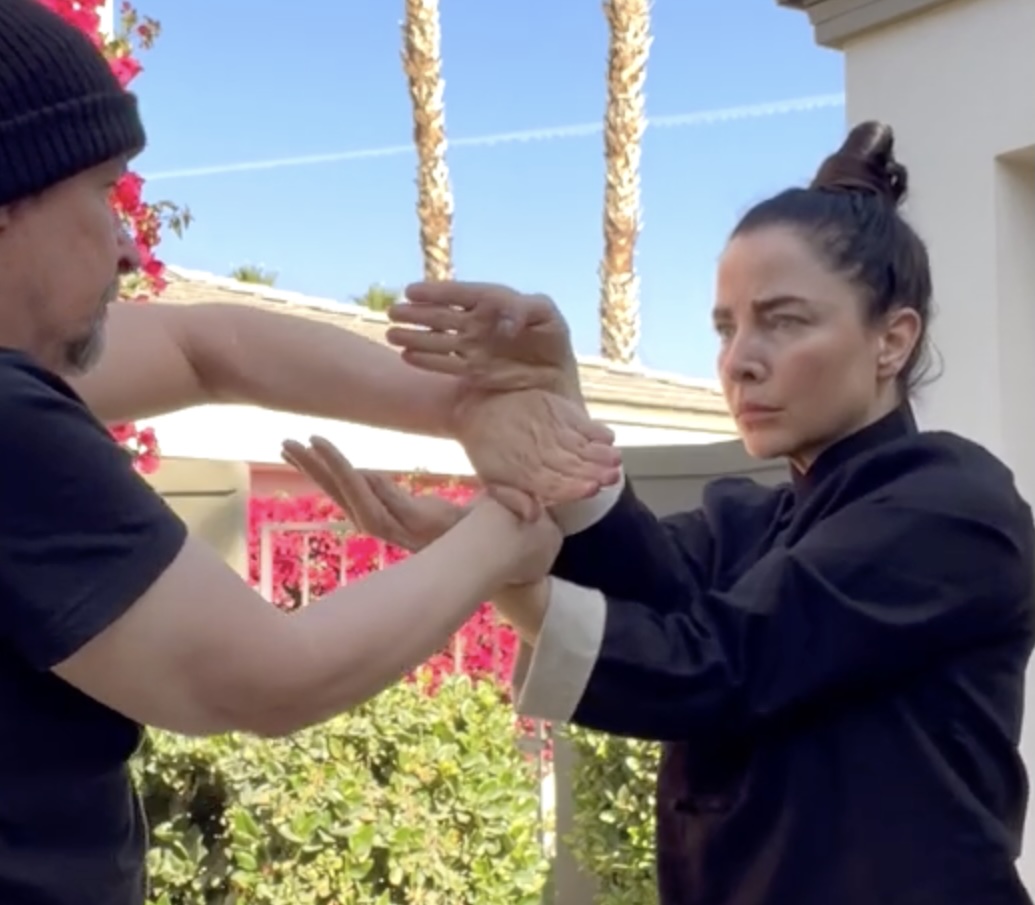
What Chi Sao is, and what it isn't
Chi Sao, usually translated as "sticking hands" or "sticky hands", is a partner exercise in which two people keep their forearms in contact while performing a set of offensive and defensive movements. Instead of reacting to what they see, each person learns to react to what they feel: changes in pressure, direction and intention, felt through the contact.
The most important thing to understand is that Chi Sao is a training method, not a fight. It is a laboratory for structure and sensitivity. Treating it as a contest, where you try to "win" every roll, defeats its purpose and makes it unsafe.
What Chi Sao trains
- Structure under pressure: keeping your elbow, wrist and stance aligned when force comes in.
- Relaxation: staying soft enough to feel and respond instead of muscling.
- Forward energy: a constant, gentle intention toward the centerline, so if your partner's arm moves away, your hand naturally follows into the gap.
- Correct transitions: moving between Tan Sao, Bong Sao and Fook Sao without gaps.
- Reflexive response: reacting to changes in pressure without conscious thought.
The first four of these can largely be built through solo practice, especially Sil Lim Tao and the wooden dummy. The fifth is where a partner matters most. You will also find every Chi Sao problem, whether collapsing under pressure, tensing up or losing the centerline, traces back to structure. That is why I tell students that training alone is preparation for Chi Sao, not a detour from it.
The positions you need first
Chi Sao is built from the hand positions in Sil Lim Tao. Before your first roll, you should be comfortable with:
- Tan Sao: the palm-up dispersing hand, spiralling forward toward the centerline.
- Bong Sao: the wing arm, a temporary shape with the elbow raised to absorb pressure.
- Fook Sao: the bridging arm that rests over the partner's arm, controlling with the elbow.
- Wu Sao: the guarding hand that protects the centerline.
Each of these is covered with common errors in the hand techniques lesson, and in my Wing Chun glossary.
Single-hand Chi Sao (Dan Chi Sao)
Dan Chi Sao is where partner sensitivity training usually begins. Each person uses one arm, and the pair work through a set pattern: one partner's arm in one position meets the other's in a complementary position, and the pattern cycles so that each person takes turns attacking and defending, including a strike and a deflection. Because only one arm is involved and the pattern repeats, beginners can focus on contact, timing, elbow position and relaxation without being overwhelmed.
The exact positions and sequence in Dan Chi Sao vary between lineages, so learn the pattern your Sifu teaches and practise it as shown rather than mixing versions.
What to focus on: keep the contact light but constant; keep your elbow down and on the centerline; keep a gentle forward intention; and stay relaxed through the whole cycle. Swap arms regularly so both sides develop evenly.
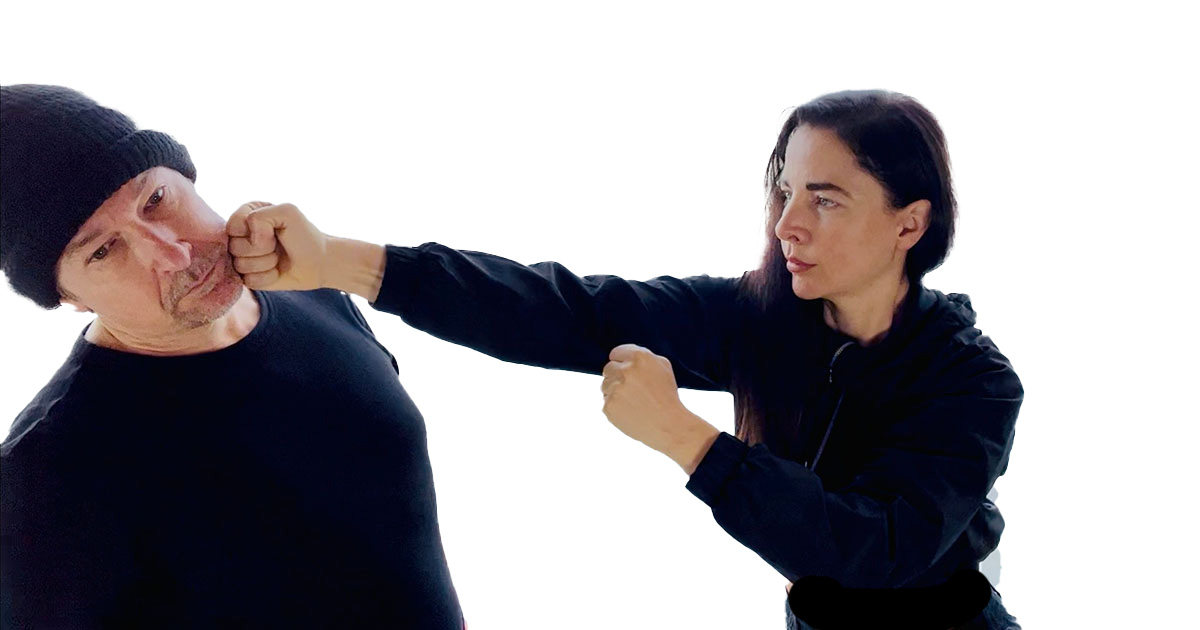
Double-hand Chi Sao (rolling)
In double-hand Chi Sao, both partners use both arms. The basic exercise is the roll, called Poon Sao: the arms move in a continuous circular pattern, cycling through Tan Sao, Bong Sao and Fook Sao while staying in contact.
As proficiency develops, techniques are introduced from inside the roll: trapping, striking and control. The training progresses from predictable, structured movement toward more spontaneous exchanges, and from there into the techniques of the whole system.
This is another area where lineages differ. In Traditional Wing Chun, as it was passed down to me by Master Brian Lewadny, who learned it from Grandmaster William Cheung, the hand positions in the roll are different from those used in mainstream Wing Chun. Neither is simply wrong, but if you train with someone from a different line, talk about it first so you are rolling the same way. My post on Traditional vs mainstream Wing Chun explains the broader differences.
What you can practise solo
Chi Sao is a contact skill, and contact refines it. But most of what sits underneath it can be built alone. This is how I break it down for online students:
- Structure through Sil Lim Tao. Slow, precise practice builds the elbow position, relaxation and forward energy that Chi Sao depends on.
- Solo rolling shapes. Drill the Dan Chi Sao and Poon Sao patterns in front of a mirror, so your body knows the exact positions of Tan Sao, Bong Sao and Fook Sao and the transitions between them before you touch a partner.
- Contact with the wooden dummy. The Muk Yan Jong gives real, unyielding contact. It won't push back like a person, but it trains the feeling of contact and how your structure responds to resistance. No dummy yet? See training without a dummy.
- Visualization and partner practice together. Mentally rehearsing the roll, feeling the pressure shift and your response, builds the patterns you then test on a real partner whenever you can.
I cover the research behind mental practice, and a ten-minute Chi Sao visualization session, in my post can you learn Chi Sao online?
Try this: solo Chi Sao preparation (15 minutes)
- Stance (2 min): settle into your stance and relax your shoulders.
- Sil Lim Tao, first section (5 min): slowly, watching elbow position.
- Mirror rolling (5 min): slow single-arm shapes on each side, then the Tan Sao, Bong Sao and Fook Sao roll with both arms, elbows staying in.
- Visualization (3 min): eyes closed, picture a partner in front of you, feel the contact and roll at real speed, staying relaxed. Finish with a few slow physical rolls.
Partner etiquette
Good Chi Sao depends on trust. These habits make it productive and keep both partners coming back:
- Agree on the purpose before you start. Are you practising the roll, drilling one technique, or adding light pressure? Say it out loud.
- Match your partner's level. If they are newer, slow down and give them clear, honest pressure they can learn from.
- Cooperate, don't compete. If you feel an opening, show it gently and reset. The aim is for both of you to improve.
- Talk briefly, train mostly. Short feedback between rounds works better than stopping constantly.
- Respect lineage differences. If you learned a different roll, agree on one version for the session.
- Thank your partner. They are lending you their time and their arms.
Safety
- Remove rings, watches and bracelets, and keep fingernails short.
- Start slow with light pressure. Increase pace or pressure only when both partners agree.
- Strikes in beginner Chi Sao should be controlled and stop short or land very lightly, never fast to the face. Finger strikes must never go toward the eyes.
- Agree on a clear word or tap that means "stop", and respect it immediately.
- Don't force joints. If a position strains your elbow, wrist or shoulder, stop and reset.
- Rest when you get tired; fatigue is when structure collapses and injuries happen.
- If you have a heart condition, high blood pressure, joint problems or any other health concern, check with your doctor before starting partner training.
For more structured partner work, see partner drills, and for gear such as gloves and eye protection for later stages, protective gear.
Who to practise with
Your partner doesn't need to be a Wing Chun expert. A friend, family member or fellow student who learns the basic roll can give you enough live feedback to sharpen what you have built alone. Record your sessions and compare them with your lessons to catch mistakes. If you want guided feedback on your rolling, my online course includes graded video exams at each level; and for more on training alone, see learning Wing Chun online and my post on training without a partner.
Frequently asked questions
What is Chi Sao?
Chi Sao, or sticking hands, is a Wing Chun partner training method in which two people keep their forearms in contact while rolling, testing and responding to pressure. It develops sensitivity, structure, relaxation and reflexes. It is a training method, not a fight.
What is the difference between Dan Chi Sao and double-hand Chi Sao?
Dan Chi Sao uses one arm each and a set pattern, so beginners can learn contact, timing and the basic positions without too much to manage. Double-hand rolling (Poon Sao) uses both arms, cycling through Tan Sao, Bong Sao and Fook Sao, and is the base for more advanced Chi Sao.
Can you learn Chi Sao online?
You can learn its structure, shapes, rolling patterns and principles online and build much of the skill through Sil Lim Tao, solo rolling, the wooden dummy and visualization. Live sensitivity is refined through contact, so add practice with any available partner.
Do I need an experienced partner for Chi Sao?
No. A friend, family member or fellow student who learns the basic roll gives you enough live feedback to start. Agree on a slow pace and light pressure, and build up only as you both become comfortable.
When should a beginner start Chi Sao?
After the solo foundations are in place: a stable stance, Sil Lim Tao and the Tan Sao, Bong Sao and Fook Sao positions. Chi Sao cannot be done well without the structure that solo practice builds first.
Next: partner drills · hand techniques · centerline theory · all lessons