Before you start: three rules for every technique
Every hand technique in Wing Chun is an expression of a few principles. Keep these in mind as you read, and check them every time you practise:
- Elbows down and in. The immovable elbow keeps your arm on the centerline and gives it strength. Bong Sao is the single deliberate exception.
- Shoulders relaxed. Tension makes techniques slow and stiff, and stops you feeling what your opponent is doing.
- Forward intent. Even defensive shapes move toward the opponent's centerline rather than pulling back.
If these are new to you, read the core principles of Wing Chun and centerline theory first. A note on lineage: the details below follow Traditional Wing Chun as it was passed down to me by Master Brian Lewadny, who learned it from Grandmaster William Cheung. Some schools teach mainstream Wing Chun with different hand positions and elbow lines. If your Sifu shows you something different, follow your Sifu.
Tan Sao (dispersing hand)
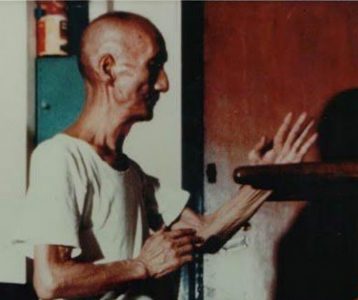
What it does: Tan Sao is a palm-up position with the arm extended forward. It deflects an incoming attack away from your centerline while your structure stays strong. It is not a static block; it spirals forward toward the opponent's centerline, so it deflects and pressures at the same time.
When it's used: Against straight attacks toward the upper body, very often together with a strike from the other hand. It appears in Sil Lim Tao and is a core position in Chi Sao.
Common errors: Letting the elbow drift out to the side; lifting the shoulder; holding Tan Sao as a frozen block rather than a forward movement; reaching so far that the arm locks straight.
Bong Sao (wing arm)
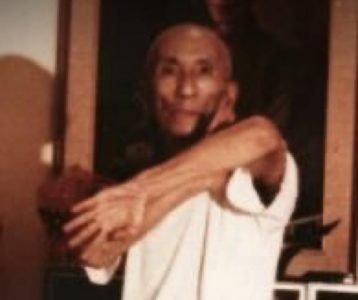
What it does: Bong Sao rolls the forearm and raises the elbow, deflecting force that is pressing into you. It is a temporary shape, used to absorb pressure for a moment and then transition straight into another technique. Wing Chun cannot exist without Bong Sao; it is vital for dealing with stronger opponents.
When it's used: Bong Sao should not be your first choice of defence. It is a response, for example when your punch is pressed off line or when an opponent pulls on your arm with Lop Sao. It appears in Sil Lim Tao and Chum Kiu and is part of the basic roll in Chi Sao.
Common errors: Holding Bong Sao as a fixed block; lifting the whole arm away from the body; raising the shoulder along with the elbow; staying in Bong Sao instead of moving on. It is the only technique that does not follow the elbow-on-the-centerline rule, so it must be brief.
Fook Sao (bridging arm)
What it does: Fook Sao lays the forearm over the opponent's arm at an angle, creating a bridge. It lets you feel, control and redirect their arm while keeping your own centerline protected and your hand ready to strike.
When it's used: When you are in contact with an opponent's arm, and constantly in Chi Sao, where it is one of the foundation positions alongside Tan Sao and Bong Sao. It appears in Sil Lim Tao.
Common errors: Pressing down with the hand instead of controlling with the elbow; letting the elbow float out; gripping with tension so you can't feel changes in pressure.
Pak Sao (slapping hand)
What it does: Pak Sao is a quick, short slap with the palm that redirects an incoming strike and clears the line. Done well, it disrupts the opponent's timing and leaves their arm in a position you can control.
When it's used: Against a committed straight attack, almost always with a simultaneous strike from the other hand. It is one of the clearest examples of simultaneous attack and defence, and a natural lead-in to the chain punch.
Common errors: Slapping too wide, past your own shoulder line, which opens you up; winding up before the slap; slapping with the whole arm instead of a short, sharp movement; forgetting to strike at the same time.
Lop Sao (grabbing hand)
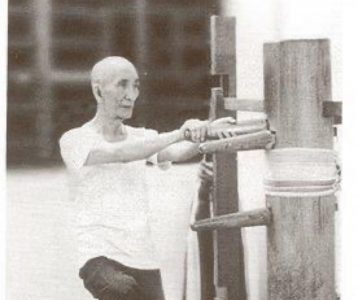
What it does: Lop Sao seizes the opponent's arm or wrist and pulls it downward or to the side with a quick, controlled motion. This removes the arm from the line and disturbs their balance, setting up a strike.
When it's used: Often after a deflection such as Tan Sao, Bong Sao or Pak Sao, when you have contact with the arm. It is trained in Chi Sao, where you learn by feel when it is safe to apply.
Common errors: Grabbing too hard and tensing your whole body; pulling toward yourself instead of down and across; mistiming the pull so the opponent follows it into you; forgetting that the other hand should be striking.
Jum Sao (sinking hand)
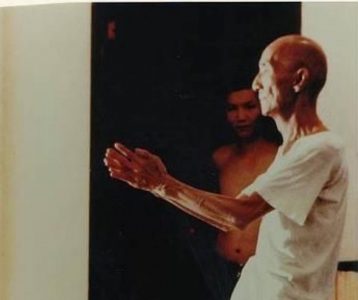
What it does: Jum Sao drops the hand and forearm slightly into an incoming force, sinking and guiding it rather than fighting it. The hand stays relaxed while the body's structure supports the arm.
When it's used: Against strong attacks to the middle of the body, and in Chi Sao to feel and control an opponent's pressure without being overpowered. It is often linked with Tan Sao, Fook Sao or Pak Sao.
Common errors: Chopping downward with force instead of sinking; dropping the elbow so far that the arm loses its shape; leaning forward to meet the force rather than letting the stance take it.
Kwan Sao (rotating arms)
What it does: Kwan Sao uses both arms together in a rotating movement: one arm sweeps while the other guards or deflects. The rotation lets you redirect force from different angles while keeping your centerline covered.
When it's used: When an attack comes in at an angle, or when a simple deflection isn't enough, and in Chi Sao for circular changes of position. Switching Kwan Sao is also an excellent solo drill for building the transition between defensive and offensive positions.
Common errors: Letting the arms move independently instead of as one coordinated rotation; making the circle too big; lifting the shoulders; losing the centerline halfway through the change.
Huen Sao (circling hand)
What it does: Huen Sao is a small circling movement of the hand and wrist. Its purpose is to change position around an opponent's arm, for example from one side of their arm to the other, without losing contact or opening your centerline.
When it's used: It is trained in the forms and becomes useful in contact work, where you need to reposition your hand to strike or control. Exactly how it is shaped and where it appears varies between lineages, so learn it from your Sifu.
Common errors: Circling from the shoulder instead of the wrist and forearm; making the circle large; letting the elbow drift out during the circle.
Gaan Sao (splitting arm)
What it does: Gaan Sao is a low deflection, generally used to clear attacks aimed at the middle and lower body away from your centerline.
When it's used: Against low and mid-level attacks, usually combined with footwork and a strike from the other hand. The exact shape and the forms in which it appears differ between lineages, so treat this as a description of purpose and get the details from your instructor.
Common errors: Swinging the arm wide instead of keeping the movement close to the body; bending forward to reach low; defending with the arm alone instead of with the stance and footwork.
Practice plan: hand technique repetitions
- Mirror reps (8 min): Tan Sao, Bong Sao, Fook Sao, Pak Sao and Jum Sao, slowly, five on each side. Freeze at the end of each and check the elbow.
- Pairs (5 min): combine a defence with a strike: Pak Sao with a punch, Tan Sao with a punch, Lop Sao into a punch, all in the air.
- Switching Kwan Sao (3 min): slow, smooth changes side to side.
- Sil Lim Tao (8–10 min): watch for the same shapes inside the form.
Warm up your wrists and shoulders first. If you have joint problems or a health condition, check with your doctor before starting, and keep partner work light and controlled.
Practising with a partner
Once the shapes are familiar, a partner adds timing and real pressure. Start with slow, agreed attacks: your partner throws a straight punch at chest height and you answer with Pak Sao and a punch that stops short. Keep the pace slow, contact light, and never aim fast strikes at the face. When you are ready for contact sensitivity, move on to Chi Sao, and see partner drills for more ideas.
Learn more
For fuller descriptions of each term, see my Wing Chun glossary. The shapes live inside the forms: start with the Sil Lim Tao practice guide and my post on Sil Lim Tao, then Chum Kiu. Later, the wooden dummy lets you test angles against a solid structure. If you would like your techniques checked on video, my online course grades each level by video exam.
Frequently asked questions
Which Wing Chun hand technique should I learn first?
Most students start with the guard (Wu Sao) and the shapes in Sil Lim Tao: Tan Sao, Bong Sao and Fook Sao. Pak Sao is usually added early because it is simple and clearly shows simultaneous attack and defence.
What is the difference between Pak Sao and Lop Sao?
Pak Sao is a quick slap that redirects an incoming arm and clears the line. Lop Sao grabs and pulls the arm downward or to the side to control it and disturb balance. Pak Sao moves the arm away; Lop Sao takes hold of it.
Why should Bong Sao not be my first choice of defence?
Bong Sao is a temporary shape used when you are under pressure, such as when a punch has been pushed off line. It is the one technique where the elbow rises off the centerline, so you use it briefly and move straight into another technique.
Can I practise hand techniques without a partner?
Yes. Slow repetitions in front of a mirror, the forms, switching Kwan Sao drills and solo rolling shapes all train the hand techniques alone. A partner later adds real pressure and timing, especially in Chi Sao.
Why do the techniques look different between Wing Chun schools?
Lineages differ in details such as elbow line and hand positions. Some schools teach mainstream Wing Chun, others teach Traditional Wing Chun. Neither is simply wrong; learn the version your Sifu teaches and practise it consistently.
Next: the Wing Chun punch · Chi Sao explained · beginner mistakes · all lessons