Gear
Wing Chun Training Gear Guide
What a home student actually needs, what is genuinely useful later, and what to look for before you spend money on any of it.

Start with less than you think
Most Wing Chun beginners don't need to buy anything at all. The first form, Sil Lim Tao, is trained standing still in a small space. Stance, footwork and the basic hand shapes need a patch of clear floor, comfortable clothes and a way to check your own position. That is the whole kit for the first months of training.
The things that genuinely help a home student early on are cheap or free: a mirror or a phone camera so you can see your structure, a floor you can turn on without slipping, and enough room to step forward and back a few paces. If you are learning online, the camera matters most, because recorded form is how you get useful feedback. Our home training setup guide covers this in detail.
Nice to have, once you have a reason
A wall bag is often the first real purchase, because punching air for months does not teach you what happens to your wrist and elbow on contact. A Wing Chun ring is light, quiet and useful for bridging and arm work. Both are small, simple and low-risk.
The wooden dummy is the piece everyone wants, and it is a serious commitment of space and mounting. You can learn and drill the dummy form well before you own one; see training the wooden dummy form without a dummy.
Weapons come last
The butterfly swords and the long pole belong to the later stages of the Wing Chun curriculum. Buy a trainer when your syllabus actually reaches the form, not before. Wooden or synthetic trainers are the right first choice for nearly everyone, and both weapons need specific space and safety thinking.
If you are still choosing how to learn, start with learning Wing Chun online and what makes a good Wing Chun course. The right instruction matters far more than the right equipment.
The gear guides
Home Training Setup
Building a practice space at three levels: minimal, moderate and a dedicated room. Floor, mirror and camera.
Plan your space →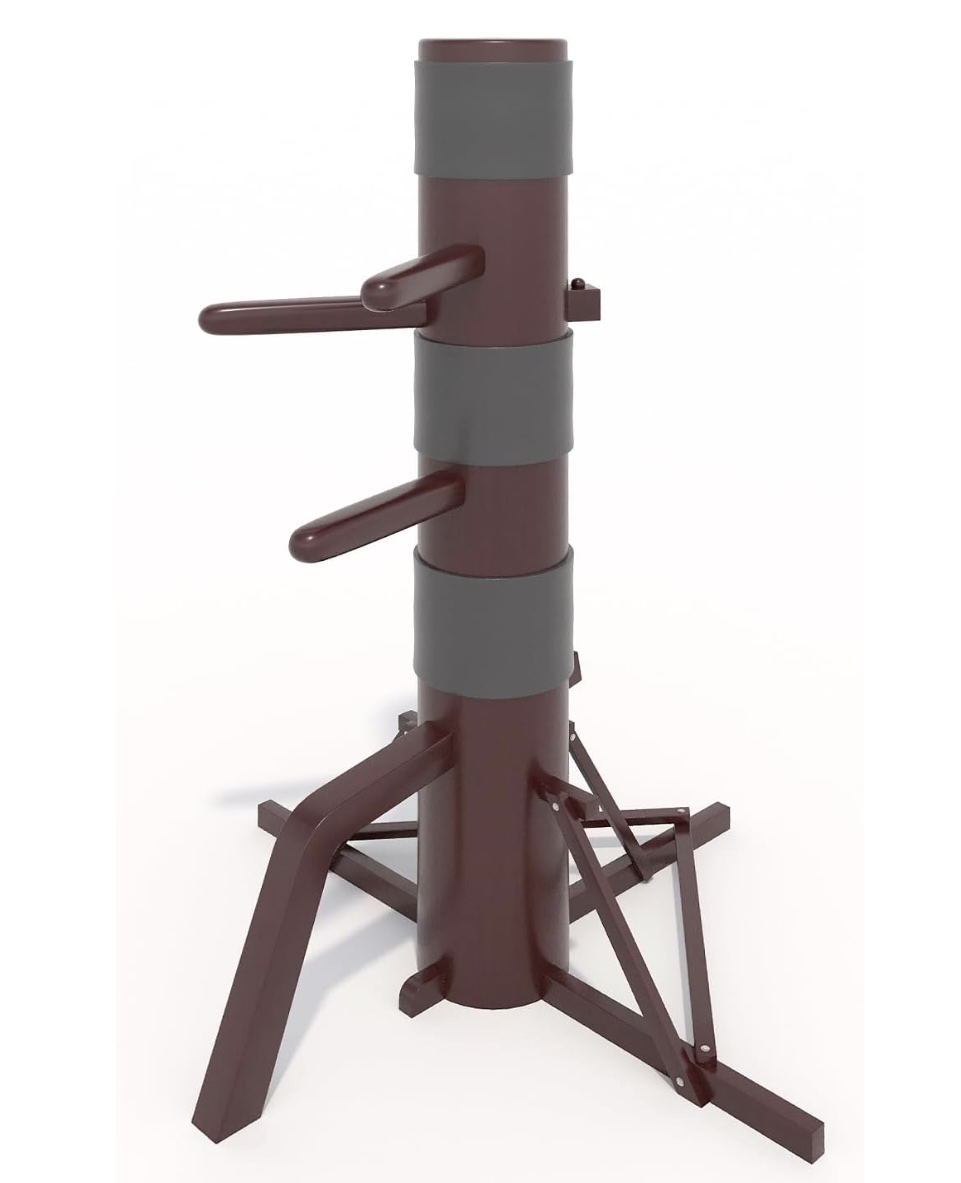
Wooden Dummy Buyer's Guide
In-ground, frame, wall-mounted, free-standing and DIY dummies, plus materials, mounting and maintenance.
Read the guide →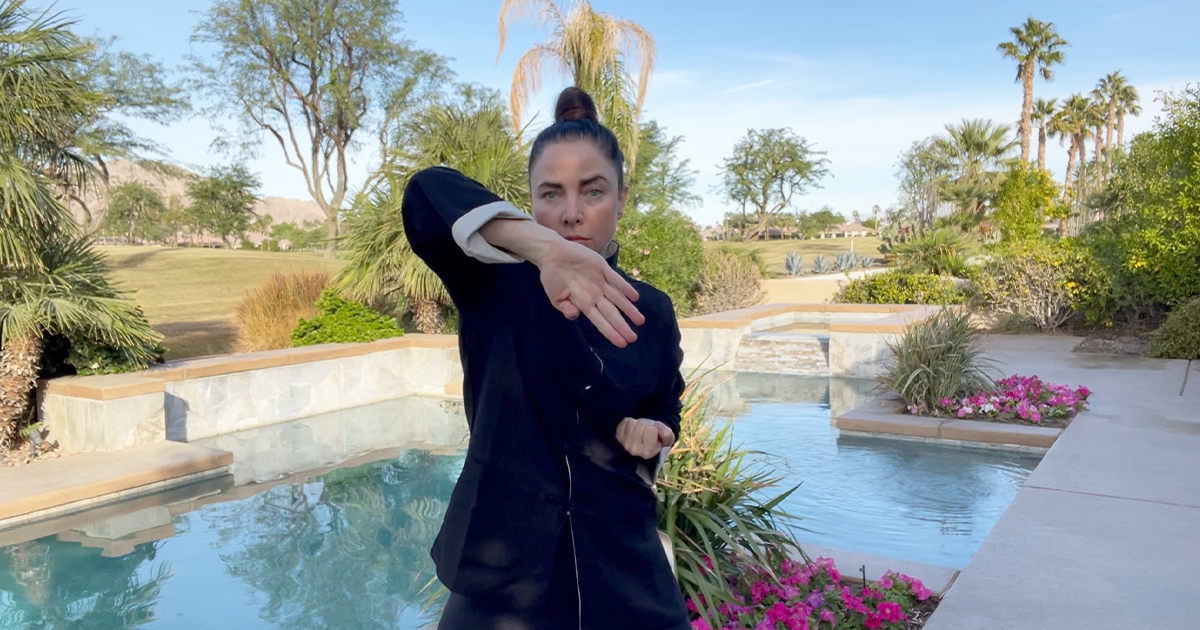
Dummy Form Without a Dummy
How to train the Muk Yan Jong form in the air, and what that can and can't develop.
Train without one →
Rings, Wall Bags & Mitts
The Wing Chun ring, wall bag fills and mounting, focus mitts, and a sensible conditioning progression.
See the options →
Butterfly Swords
Wooden and plastic trainers, blunt steel and sharp blades: weight, length, guard and safety.
Read the guide →
The Long Pole
Taper, wood, length and ceiling space for the Luk Dim Boon Gwun, plus alternatives for small homes.
What to buy →
Uniform, Sash and Shoes
What to wear for training, the sash colours, and the right shoes.
Read the guide →
Protective Gear
Gloves, mitts, mouthguards and eye protection, and when each matters.
Read the guide →Further reading from Kung Fu Kendra
Sifu Kendra Mahon has written about equipment on her own blog: Wing Chun training equipment and Wing Chun solo training. You can also browse Wing Chun books, films and lineages on this site.