Why contact training matters at home
Training in the air builds the shape of a technique. It doesn't tell you what happens when your fist, wrist and elbow meet something solid. Students who only punch air often find their wrist bends or their elbow drifts the first time they hit a real target. A little regular contact work fixes that, and the three tools on this page are the easiest way to get it at home.
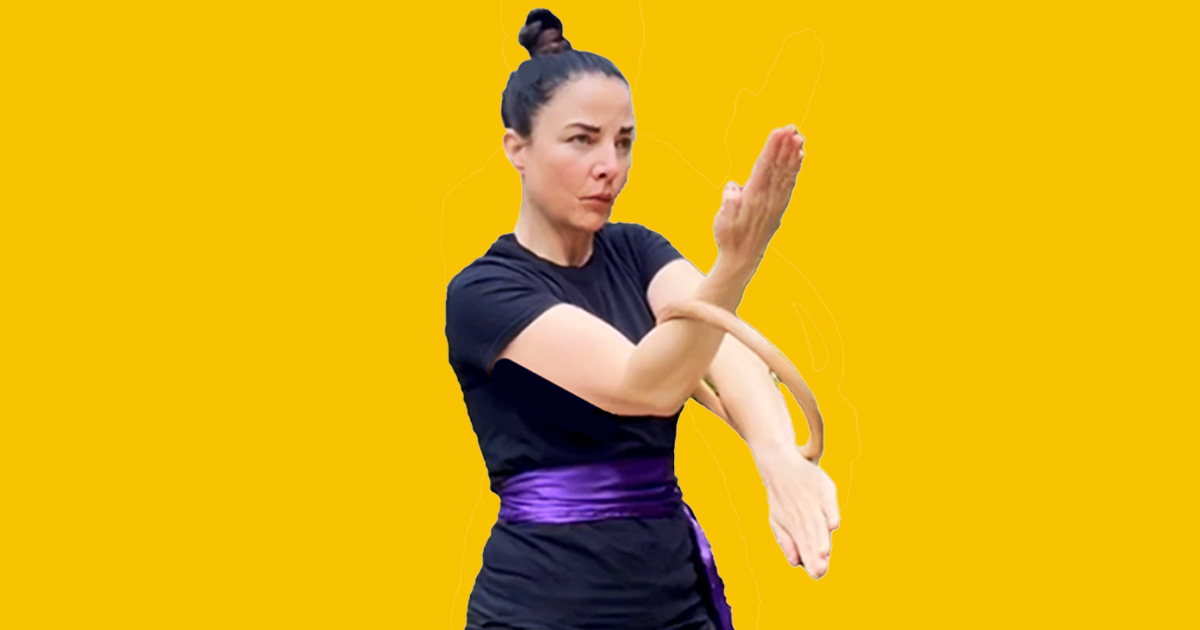
The Wing Chun ring
The Wing Chun ring is a hoop worn around both forearms while you practise forms, basic hand techniques and sensitivity drills. It adds load and feedback: your structure has to work to keep the ring in place, and you feel immediately when your arms drift off line. It is quiet, takes no floor space and suits apartments well.
Rattan rings
Rattan is light, slightly flexible and comfortable on the skin. It is the usual first ring. Check that the joins are wrapped neatly and there are no sharp ends.
Wooden rings
Solid wooden rings are a little heavier and firmer than rattan. Look for smooth sanding, an even finish and no cracks along the grain.
Steel rings
Steel rings are the heaviest and give the most resistance. They are a later step, used once your structure holds up under a lighter ring. Look for smooth, rounded edges and a size that sits comfortably without digging in.
Sizing
The ring should be wide enough for both forearms to sit inside it in your guard positions without forcing your elbows out. Too small and it pinches; too big and it slides around and teaches nothing. Your instructor can tell you what size suits your build. For how the ring fits into practice, see Sifu Kendra Mahon's post Wing Chun ring training explained.
The wall bag
A wall bag is a flat, filled canvas or leather bag fixed to the wall, usually with one, two or three sections. It is the standard tool for straight punches and palm strikes, and it teaches you to keep your wrist straight and your elbow behind the fist on impact.
Fill types
- Soft fills such as dried beans, rice or softer granular material are the right place to start. They give way enough to protect your knuckles and wrists while you learn alignment.
- Medium fills, such as a mix of soft fill with some sand or fine gravel, come next, once you can hit the soft bag consistently without discomfort.
- Hard fills such as gravel or metal shot are for advanced conditioning only, and many people never need them.
Fills settle and pack down over time, so shake or re-pack the bag now and then. Use inner bags or liners so you can change the fill without emptying loose material on the floor. Avoid fills that can go mouldy if they get damp.
Mounting
- Fix the bag into masonry or wall framing with fixings rated for repeated impact. A plasterboard-only mount will fail.
- Set the height so the centre of the bag sits around your chest height in your stance, so straight punches land in the middle. Adjust to what your instructor teaches.
- A wall bag mounted on a sturdy board or frame spreads the load and reduces noise through the wall.
- If you can't drill, look for free-standing or door-frame options, but check they won't move under impact.
- Think about noise. A wall bag shared with a neighbour's bedroom will not make you popular.
Focus mitts
Focus mitts are padded targets worn by a partner. Unlike a wall bag, they move. A partner can feed you different heights, angles and timings, which trains distance and reaction as well as striking. They are also useful for chain punching drills at a pace you can control.
- Choose mitts with a firm, even pad and a comfortable hand compartment for your partner.
- Teach your partner to hold the mitts firmly with a slight forward pressure, and to keep them away from their own face.
- Start slowly and agree on signals to stop. Speed comes later.
A sensible conditioning progression
Conditioning should be gradual. Bones, tendons and skin adapt over months, not days, and pushing too hard leads to bruised knuckles, sore wrists and weeks off training. A typical progression looks like this:
- Structure first. Train your punches and palms in the air and with the ring until your wrist and elbow alignment is consistent on camera.
- Light contact. Begin on a soft-filled wall bag at moderate power, with short sessions a few times a week.
- Build volume. Increase the number of strikes before you increase power. Stop at any sharp pain.
- Firmer fill. Only when the soft bag feels easy, move to a medium fill.
- Moving targets. Add focus mitts with a partner to train distance and timing.
- Heavier ring. Move from rattan or wood to a heavier ring when your structure holds under the lighter one.
Rest days matter. If your knuckles or wrists stay sore the next day, ease off. Some soreness is normal at first; sharp pain, swelling or numbness is not.
How these fit with other gear
The ring and wall bag are good first purchases because they are small, quiet and useful at every stage. A wooden dummy adds angles and footwork, and you can learn the dummy form without a dummy in the meantime. For where to put everything, see our home training setup guide. Sifu Kendra Mahon's post on Wing Chun training equipment covers the wider toolkit.
Ring training is part of the Kung Fu Kendra Wing Chun Online Certification Course. Judge it, and any other course, with our course checklist and the student reviews page.
Frequently asked questions
What is a Wing Chun ring used for?
The ring is worn around the forearms during forms, hand drills and sensitivity work. It adds resistance and feedback, which helps develop forearm strength, structure and bridging. It is usually a rattan, wooden or metal hoop.
Should I start with a rattan or steel ring?
Most students start with rattan or wood because it is lighter and kinder to the forearms. A steel ring adds weight and is better saved for when your structure holds up under the lighter ring.
What should I fill a wall bag with?
Beginners usually start with a soft fill such as dried beans, rice or a softer granular fill, then move to firmer fills over months as hands and wrists adapt. Avoid starting with very hard fills like gravel or steel shot.
How high should a wall bag be mounted?
Usually so the centre of the bag is roughly at your own chest or sternum height when you stand in your training stance, so straight punches land on the middle of the bag. Adjust to what your instructor teaches.
Do I need a partner for focus mitts?
Yes, focus mitts need someone to hold them. A partner who feeds angles and distances gives you moving targets that a wall bag can’t. They do not need Wing Chun experience to hold mitts safely for basic drills.
Next: home training setup · wooden dummy guide · all gear guides