
When you need protective gear, and when you don’t
Wing Chun is built on a lot of solo practice. Your forms, stance, footwork, chain punching in the air and hand technique drills need nothing but a clear space. Even early partner work, slow arm-rolling and cooperative drills, needs no special gear. In fact, heavy protective gear at this stage can get in the way, because Wing Chun relies on feeling your partner’s arms and seeing your own hand shapes.
Protection starts to matter when three things increase:
- Contact. Strikes that actually land, on pads, a partner or a target.
- Speed and unpredictability. Pressure drills and sparring, where neither person knows exactly what is coming.
- Reach. Kicks and weapons, which can reach the groin, legs and face from further away.
The rest of this guide covers each piece of gear and the point at which it is worth adding. Lineages and schools differ in how much contact they use and when, so always follow your own instructor’s rules first.
Safety: protective gear reduces risk; it does not remove it. Control matters more than padding. Partner drills should be cooperative, with an agreed signal to stop, and sparring should only happen under qualified supervision once you have solid basics. If you have a health condition, check with your doctor before adding contact training.
Before any partner work
A few habits protect you and your partner before you add any equipment at all:
- Remove rings, watches, bracelets and earrings.
- Keep fingernails short and smooth.
- Tie back long hair.
- Train on a non-slip surface with space around you. See what to wear and which shoes to choose.
- Agree on pace and pressure before you start, and keep it there.
Gloves and hand protection
Your hands are your main tools in Wing Chun, so the choice of hand protection is a balance between safety and keeping your techniques intact.
For the wall bag
Many students train the wall bag bare-handed, starting with light, relaxed chain punches and building up over weeks so the hands and wrists can adapt. If the skin on your knuckles breaks, or your wrists need support, light hand wraps or thin bag gloves are reasonable while you build up. Whatever you wear, the real protection is a straight wrist and correct punching structure. My Wing Chun punch lesson explains how.
For sparring and pressure drills
Large, heavily padded boxing gloves hide your hand shapes and make sensitivity and trapping hard to train, so they are not ideal for most Wing Chun work. For controlled sparring, many schools prefer lighter, open-finger gloves, which let you use open-hand techniques such as Pak Sao and Lop Sao while still padding the knuckles. Some schools do use boxing gloves for sparring safety. Follow your instructor.
What to look for
- Padding over the knuckles that does not bunch up when you make a fist.
- A secure wrist closure that supports the joint without cutting off circulation.
- Enough freedom in the fingers for open-hand techniques, if your drills need them.
- A fit snug enough that your hand does not slide inside the glove.
Focus mitts
Focus mitts are worn by the partner who holds, not the one who strikes. They let you practise chain punching on a target that moves, and develop timing and distance. They are an inexpensive and useful addition once you have a training partner.
- Hold on the centreline. Wing Chun punches travel straight down the middle, so hold the mitts in front of your own centre at a realistic height.
- Meet the punch, don’t push into it. Hold firmly with relaxed elbows. Pushing the mitt forward can jar the striker’s wrist.
- Start slow. Begin with single punches at a steady distance, then change the angle or distance slightly to make the striker adjust their footwork.
- Look for a curved palm that catches the fist cleanly and padding that protects the holder’s hand and wrist.
For drills to use with mitts and a partner, see partner drills.

Mouthguard
A mouthguard is one of the simplest and most important pieces of protection. Wear one whenever a strike could reach your face or jaw: sparring, fast pressure drills, and any Chi Sao that includes strikes at speed. Slow, cooperative rolling does not need one.
- Types: mouldable “boil and bite” guards are widely available and easy to fit; a dentist can also make a custom-fitted guard, which many people find more comfortable.
- Fit: it should stay in place without you clenching, cover the upper teeth, and let you breathe and speak a few words.
- Care: rinse it after every use, let it dry in a ventilated case, and replace it when it is worn, cracked or loose.
If you wear braces or have dental work, ask your dentist which type to use.
Groin guard
Wing Chun kicks are low, aimed at targets such as the knee, shin and ankle, and many close-range positions put the groin within reach of a knee or a stray kick. Once you add kicking drills with a partner, stepping drills with leg contact, or any sparring, a groin guard is sensible. See Wing Chun kicks for what those drills involve.
- Guards are made for both men and women; choose one designed for your body.
- Look for a cup or shield that stays in place when you step, turn and sit into your stance, held by a supportive garment or strap.
- Check that it does not restrict your footwork. Practise a few steps and turns before your first drill.
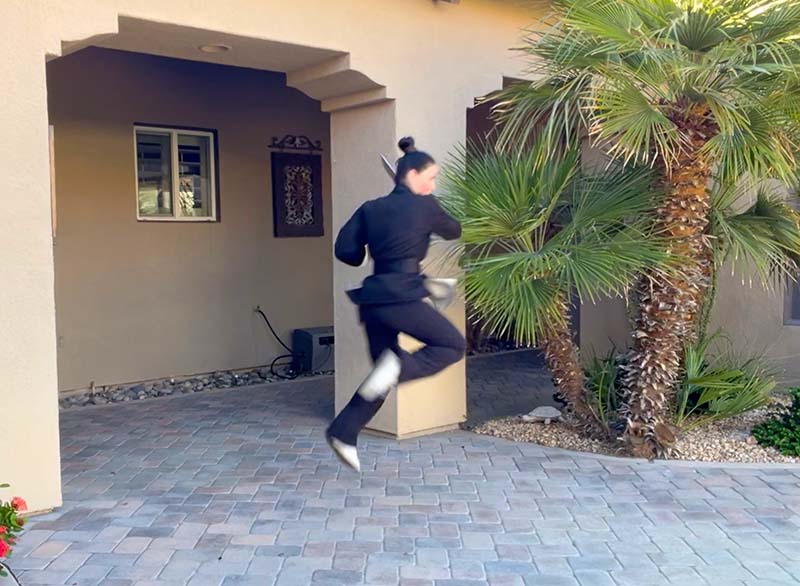
Eye protection for weapons practice
The two Wing Chun weapons, the long pole (Luk Dim Boon Gwun) and the butterfly swords (Baat Jaam Dao), come late in the system and add reach and speed that empty hands do not have. The eyes and face are especially at risk.
- Solo practice: a clear space matters most. Check ceiling height and walls, keep people and pets out of range, and use training weapons until your form is reliable.
- Partner practice: use training weapons made of wood, rattan, plastic or padding, never live blades, and wear eye protection. Clear safety glasses or goggles suit light, slow drills; a suitable mask that protects the whole face is better as speed and contact increase.
- Hands: padded gloves protect the fingers and knuckles in weapons contact drills, where the hands are often the first thing struck.
Laws on owning and carrying swords vary a great deal by country and region. Check the rules where you live before buying any blade.
Other gear you may meet
- Headgear: used by some schools for sparring. It adds protection but can limit vision, so get used to it gradually.
- Shin guards: useful for kicking drills and leg contact, and some students like them for early dummy leg work.
- Forearm protection: rarely needed. Wing Chun builds forearm conditioning gradually instead; see conditioning for Wing Chun.
Which gear for which training
| Training | Recommended protection |
|---|---|
| Forms, stance and footwork (solo) | None; clear, non-slip space |
| Wall bag | Bare hands built up gradually; optional light wraps or bag gloves |
| Focus mitt drills | Mitts for the holder; optional light gloves for the striker |
| Slow Chi Sao rolling and cooperative drills | No gear; jewellery off, nails short |
| Chi Sao with strikes at speed, pressure drills | Mouthguard; light gloves if your school uses them |
| Kicking and leg-contact drills | Groin guard; optional shin guards |
| Supervised sparring | Gloves, mouthguard, groin guard; headgear and shin guards as your school requires |
| Weapons, solo | Training weapons, clear space |
| Weapons with a partner | Training weapons, eye protection or mask, padded gloves |
Try this: a pre-session safety check
- Jewellery off, nails short, hair tied back.
- Floor clear, dry and non-slip; space checked for weapons work.
- Gear for today’s drills on, fitted and undamaged.
- Pace, pressure and stop signal agreed with your partner.
- Warm-up done before any contact.
Fit, hygiene and replacement
Gear only protects you if it fits and is in good condition. Try everything on and move in it before your first drill. Air gloves, guards and wraps after every session rather than leaving them sealed in a bag. Wash wraps regularly and wipe down padded gear. Replace anything that is cracked, torn, flattened or no longer stays in place.
For the wider picture of what to buy and when, see the gear guides and the home training setup. If you would like guidance on when to add partner and contact work to your own training, my online course builds it in level by level.
Frequently asked questions
Do beginners need protective gear for Wing Chun?
Usually not at first. Forms, stance work, footwork and slow cooperative drills need no protective gear, just a clear space and no jewellery. Gear becomes important as partner contact, speed and kicking increase, and before any sparring.
Should I wear boxing gloves for Wing Chun?
Large boxing gloves hide your hand shapes and make sensitivity and trapping work hard, so they are not ideal for most Wing Chun drills. For controlled sparring many schools prefer lighter open-finger gloves, though some use boxing gloves for safety. Follow your instructor’s choice.
When should I wear a mouthguard?
Wear one whenever a strike could reach your face or jaw: sparring, fast pressure drills and any Chi Sao that includes strikes at speed. A mouthguard should fit snugly, stay in place without biting down and let you breathe. Replace it when it is worn or loose.
Do I need eye protection for weapons training?
For solo forms with training weapons, a clear, safe space matters more than goggles. When you work weapons with a partner, use training weapons rather than live blades and wear eye protection or a suitable mask, because tips and edges can reach the face quickly.
How do I keep protective gear clean?
Air everything out after each session and never leave it sealed in a bag. Clean mouthguards after every use and store them in a ventilated case. Wash wraps regularly, wipe gloves and guards, and replace anything that is cracked, torn or no longer fits.
Next: partner drills · uniform and shoes · Wing Chun self-defense · all gear guides