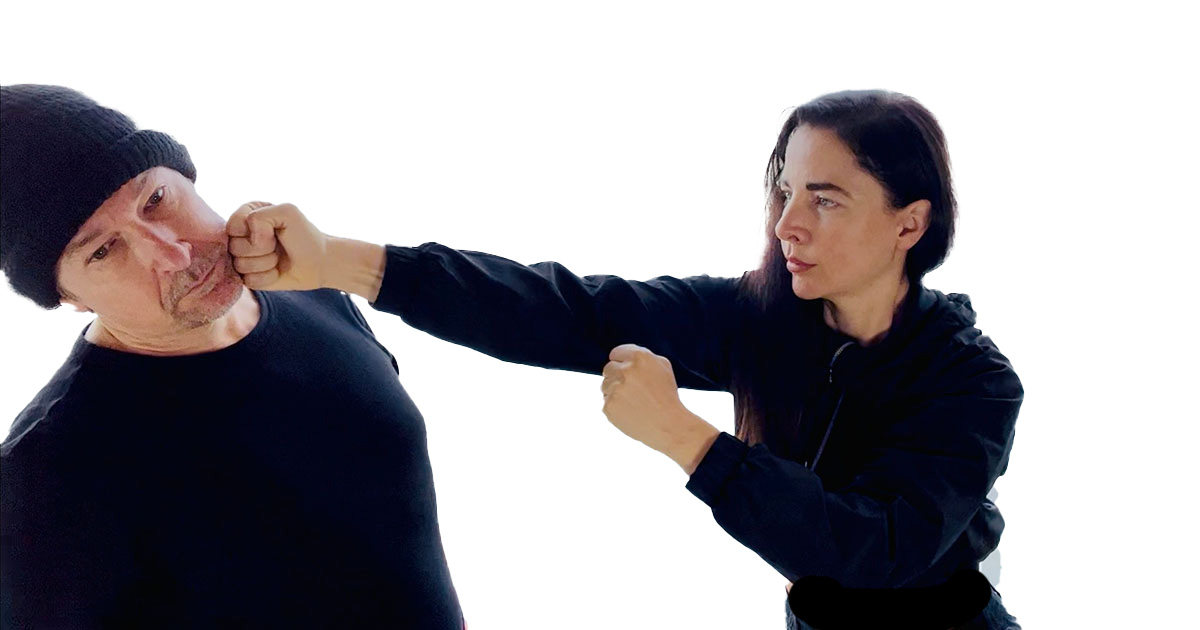
Why partner drills matter
Most of Wing Chun can be trained alone, and solo work builds structure, technique and conditioning. What it cannot fully build is the feel of contact: noticing pressure, direction and intention through your arms and responding without thinking. That comes from touching another person. Partner drills are the bridge between your forms and Chi Sao.
Your partner does not need to be a Wing Chun expert. A friend, family member or fellow student who learns the basic feed gives you enough live feedback to sharpen what you have practised alone.
A note on versions. The drills below are described at the level of purpose and basic structure. Exact hand sequences, footwork and names vary between lineages, and between instructors within a lineage. If your instructor teaches a different version, follow your instructor. The principles of control and progression apply to every version.
Before you start: etiquette and agreements
- Agree on the drill, the speed and the contact level before you start, and stick to it. Nobody quietly speeds up.
- Feeding is a skill. The person feeding the attack is helping their partner learn. Feed clean, honest attacks along the line you agreed, at the agreed speed.
- Either partner can stop the drill at any time, for any reason, without argument.
- Take turns. Swap roles regularly and work both sides equally.
- Leave ego outside. A drill is not a contest. If you "win" by forcing through, you have learned nothing about sensitivity.
- Short nails, no jewellery, and a clear, non-slip space.
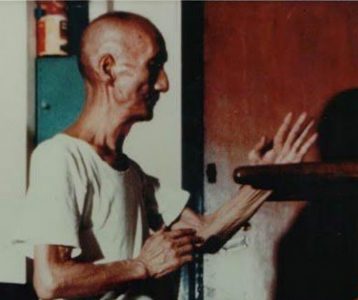
Drill 1: Pak Sao drill
Pak Sao is the slapping hand: a quick redirecting movement that knocks an incoming strike off its line and creates an opening for a counter. The drill teaches timing, a short, economical movement and the habit of countering immediately.
Basic version
- Face your partner in your guard, at a distance where a straight punch would just reach.
- Your partner feeds a slow, straight punch toward your centerline.
- You redirect it across with a short Pak Sao, keeping your elbow in and the movement small. Do not chase the arm or swing wide.
- Follow with a slow, controlled punch toward your partner's chest, stopping short or touching lightly.
- Reset and repeat 10 times, then switch sides, then switch roles.
Watch for: slapping too far (the Pak Sao should only move the punch off your centerline), shoulders rising, and a pause between the Pak Sao and the counter. With practice the two become almost simultaneous.
Drill 2: Lop Sao drill
Lop Sao is the grabbing hand: it seizes the partner's arm or wrist and pulls it down or to the side, disrupting their balance and position, usually as you strike. In many schools the Lop Sao drill is a continuous exchange in which both partners take turns pulling and responding; a pulled arm can answer by rotating into Bong Sao, and the cycle continues on the other side.
Basic version
- Your partner feeds a slow straight punch, or presents a forearm in contact with yours.
- You take the arm with Lop Sao, a short, controlled pull downward or to the side, while your other hand delivers a slow, controlled punch.
- Your partner absorbs the pull without fighting it and covers the punch, for example by rotating the arm into Bong Sao as your instructor teaches.
- Keep the exchange slow and rhythmic. Switch roles after each set.
Watch for: yanking. A poorly timed or overly aggressive Lop Sao leaves you open and can strain your partner's shoulder or neck. The pull should be short and controlled, never a jerk. Agree before you start how strong the pull will be.
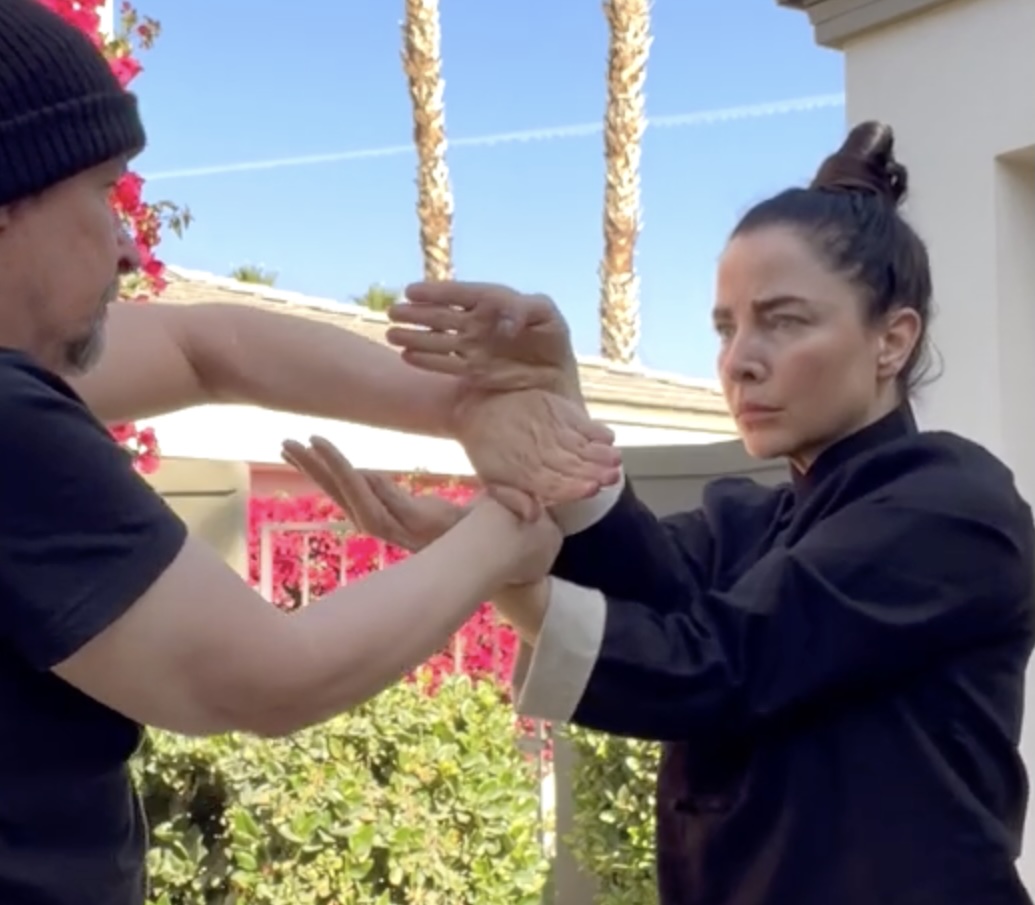
Drill 3: Dan Chi Sao (single sticking hands)
Dan Chi Sao uses one arm each in a simple, repeating cycle. It builds the habit of staying in contact, feeling pressure through the forearm and moving smoothly between Tan Sao, Bong Sao and Fook Sao. It is usually the first contact drill beginners learn, before double-arm rolling and full Chi Sao.
Basic structure
In a common version, one partner starts in Tan Sao and the other in Fook Sao, forearms touching. The Tan Sao side sends a slow palm strike forward; the Fook Sao side sinks it down with Jum Sao. The Fook Sao side then sends a slow punch; the first partner rolls up into Bong Sao to receive it; and both arms return to the starting Tan Sao and Fook Sao. Then the cycle repeats. Different lineages vary the details, so learn the exact cycle from your instructor.
Watch for: breaking contact, pushing with the shoulder instead of keeping a light forward intention, elbows flaring as the arm rotates, and rushing the transitions. Smooth and slow is the goal.
Solo preparation: you can drill the Dan Chi Sao shapes alone in front of a mirror, so your body knows the positions before you ever touch a partner. My post Can you learn Chi Sao online? explains this in detail.
Drill 4: Simple bridging drills
Bridging means making contact with an opponent's arms and recovering contact when it is lost. It is the heart of Chum Kiu, whose name means Seeking the Bridge. These two simple drills introduce the idea.
Find the bridge
- Your partner stands in front of you and slowly extends one arm at a different height or angle each time.
- You make contact with your forearm, using the hand shape that fits (for example Tan Sao, Bong Sao or Fook Sao), while keeping your elbow in and your centerline covered.
- Reset and repeat. Start slow and predictable, then let your partner vary the angle.
Stay on the bridge
- Make light forearm contact with your partner.
- Your partner slowly moves the arm: up, down, in, out, forward, back.
- Follow without losing contact and without pushing. If contact breaks, re-find it calmly.
- When you are comfortable, try a few repetitions with your eyes closed, at very slow speed.
Try this: a 20-minute partner session
- Warm up together, including wrists, shoulders and neck (3 minutes).
- Pak Sao drill: 3 sets of 10 each side, swapping roles (5 minutes).
- Dan Chi Sao: slow cycles, 1 minute per arm, swap and repeat (5 minutes).
- Bridging drills: find the bridge, then stay on the bridge (4 minutes).
- Talk it through: each partner names one thing that felt good and one to improve (3 minutes).
How to progress intensity safely
Raise one thing at a time, and only when both partners can do the current level cleanly for several sessions.
- Accuracy. Slow speed, light contact, predictable feeds. Get the shapes and timing right.
- Speed. Gradually increase speed while keeping contact light. If the shapes break down, slow down again.
- Variation. The feeder varies timing or angle within the agreed drill, so you respond rather than anticipate.
- Pressure. Add a little more forward pressure in the contact, still controlled, so your structure is tested.
- Combination. Link drills together, for example Pak Sao into Lop Sao, as your instructor teaches.
Never raise speed and pressure at the same time, and never add intensity just because one partner wants to.
Safety notes
- Counters in drills stop short or land as a light touch, never full power.
- Never aim at the eyes, throat, neck or joints, and do not practise finger strikes on a partner.
- Control every Lop Sao pull to protect your partner's shoulder and neck.
- As intensity rises, consider eye protection and a mouthguard; see protective gear.
- If either partner has a health condition, joint problem or recent injury, check with a doctor first and agree lighter limits.
- Stop immediately if anything hurts.
No partner yet?
Keep building the foundation alone: slow Sil Lim Tao, the Dan Chi Sao shapes in a mirror, a wall bag for contact, and the wooden dummy later. My post on learning without a training partner covers more options, and the daily practice routine gives you a full solo plan. If you want structured feedback on your drills and forms, my online course includes graded video exams at each level.
Frequently asked questions
Does my training partner need to know Wing Chun?
No. A friend or family member who learns the basic feed, such as a slow straight punch or the Dan Chi Sao roll, gives you enough live contact to start. Teach them the drill slowly and agree on speed and contact before you begin.
How hard should we go in partner drills?
Much lighter than you think. Start at slow speed with light contact and only raise speed, then pressure, when both partners can do the drill cleanly. The aim is to build sensitivity and correct responses, not to win the exchange.
What is the difference between Dan Chi Sao and Chi Sao?
Dan Chi Sao is single sticking hands: one arm each, in a simple repeating cycle. It is a stepping stone toward double-arm rolling and full Chi Sao, which develops sensitivity to pressure using both arms.
Do I need protective gear for these drills?
For the slow, light drills here, most people do not. As intensity rises, consider eye protection and a mouthguard, and keep fingernails short. Never aim at the eyes or throat in any drill.
What if I have no one to practise with?
Most of Wing Chun can be trained alone. Drill the Dan Chi Sao and rolling shapes in front of a mirror, use a wall bag or wooden dummy for contact, and visualise a partner. Add real partner practice whenever you can.
Next: Chi Sao explained · Wing Chun self-defense · all lessons