What Chum Kiu is for
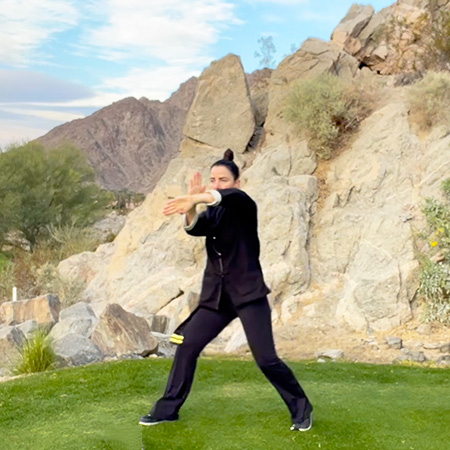
Chum Kiu means Seeking the Bridge. The bridge is the connection between you and your opponent, and the form teaches you how to find that connection, how to keep it and what to do with it once you have it. It also teaches you to turn your whole body into a power source rather than relying on your arms.
For me, Chum Kiu is where Wing Chun started to make sense as a whole. The principles from Sil Lim Tao suddenly become dynamic. You are turning, you are moving, and you are using your body as one connected unit instead of training one part at a time. My blog post What Is Chum Kiu? Wing Chun's Second Form Explained covers the background.
What Chum Kiu adds, and what each part trains
In Sil Lim Tao your feet stay planted and all the work is in the upper body. That stillness is deliberate. Chum Kiu then introduces everything you were not doing before. Rather than walking through the form movement by movement (the exact sequence differs between lineages, so follow your instructor's), I find it more useful to practise with these five themes in mind:
1. Body turning (the pivot)
Turning the whole body on its central axis to generate power, deflect attacks and change the angle of engagement. This is where Wing Chun's characteristic pivot comes from. The key is that hips and shoulders turn together; the most common error is letting the shoulders move on their own.
2. Stepping
Moving forward, backward and to the side while keeping Wing Chun structure. Most real encounters involve movement, and Chum Kiu is where you learn to move without losing your foundation. In Traditional Wing Chun we lift the feet and step on angles to move off the line of attack, and the feet never cross. See my Wing Chun footwork post for the principles.
3. Kicks
Chum Kiu introduces Wing Chun's first kicks: the side kick, the front kick and the sweeping kick, in their correct structural context. Wing Chun kicks are low and direct. In the form, the goal is balance and structure, not height. More on these in Wing Chun kicks.
4. Simultaneous hand and foot techniques
Attacking and defending with hands and feet at the same time. Practise these slowly at first, because coordination errors are easy to hide at speed.
5. Bridging
The techniques for making first contact with an opponent's arms and for recovering contact when it is lost. This is the core of what the form's name refers to, and it connects directly to partner drills and Chi Sao.
Before you start: your Sil Lim Tao matters more than ever
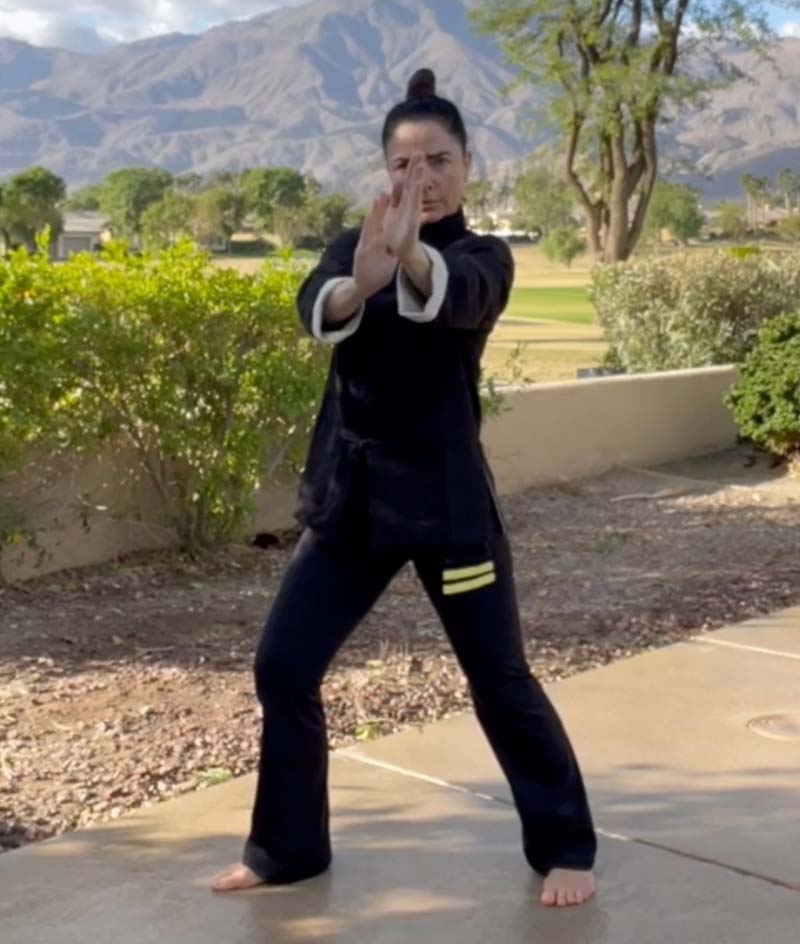
Every weakness in your Sil Lim Tao becomes more obvious in Chum Kiu. If your structure is not solid, the pivot exposes it. If your elbow energy is not developed, the bridging techniques won't work. If your stance is not rooted, the kicks pull you off balance.
That is actually a gift. Chum Kiu works as a diagnostic tool for your first form. When something fails in Chum Kiu, you almost always need to go back and fix something in Sil Lim Tao. The two forms are in constant dialogue, so keep practising Sil Lim Tao every day even after you learn Chum Kiu.
How slowly to practise
Slowly enough that you can feel your structure through every transition. The danger points in Chum Kiu are the moments of change: the start and end of a turn, the moment weight shifts during a step, the instant a foot leaves the floor for a kick. Those are exactly the moments you cannot see or feel at full speed.
- Learning stage: practise one section at a time. Watch the demonstration, follow it slowly, then practise that section alone before moving on.
- Consolidating: perform the whole form slowly, pausing briefly at the end of each turn to check that you arrived in structure.
- Later: once the shapes are reliable, let the turns and steps flow at a smooth, even pace. Speed should be the last thing you add, and only when the structure stays intact.
Two or three repetitions of Chum Kiu per session is a good amount, with full attention on smooth turning and stepping.
Breathing
Breathe slowly and naturally through the nose and keep breathing through the turns and kicks. Beginners often hold their breath as they pivot or lift a foot, which stiffens the shoulders and makes the movement jerky. If you catch yourself doing it, slow down until the breath can stay relaxed. End each practice standing quietly for a few breaths to notice any tension you have been carrying.
How often to practise
Once Chum Kiu is in your curriculum, include it in most sessions after your Sil Lim Tao. In my standard 30 to 45 minute session I suggest Sil Lim Tao, then Chum Kiu, then drilling or shadowboxing. On busy days, a single slow repetition with one focus quality is worth more than skipping it. See the daily practice routine for sample sessions.
Try this: pivot and step drills
- Pivot drill (3 minutes): from your stance, turn about 45 degrees to one side, then the other, keeping the spine upright and hips and shoulders turning together.
- Stepping drill (3 minutes): step forward and back across the room keeping your stance and centerline. Never cross the feet.
- Angle stepping (3 minutes): step off on an angle, as if moving off an attack, and arrive facing your imaginary partner.
- Shadowboxing with footwork (3 minutes): step in as you strike, pivot as you deflect, angle off as you counter.
Video checkpoints for self-correction
Record from the front and side with your full body and feet in frame. Chum Kiu travels, so check the camera catches every step. Then look for these:
- Hips and shoulders: do they turn together as one unit during each pivot, or do the shoulders lead?
- Spine: does it stay upright through the turn, or tip forward or sideways?
- Head height: does the head stay roughly level through steps and turns, or bob up and down?
- Feet: do they ever cross? Do they arrive where they should at the end of each step?
- Centerline: after every turn, are your hands still guarding the line toward your imaginary partner?
- Elbows and shoulders: do the shoulders rise or the elbows flare as you turn? Those are Sil Lim Tao errors showing up.
- Kicks: are they low and controlled? Does the supporting leg stay stable, or do you wobble and lean back?
- Timing: in simultaneous hand-and-foot moves, do both actually arrive together?
Common Chum Kiu mistakes
Starting before Sil Lim Tao is ready
Rushing into Chum Kiu without a proper foundation is one of the most common mistakes and leads to structural problems that are harder to fix later.
Shoulders turning without the hips
If the upper body twists on its own, the pivot loses its power and your structure disconnects. Think of the whole body turning as one piece.
Crossing the feet or over-stepping
Large steps and crossed feet create moments where balance and structure are compromised. Keep steps controlled and the base stable.
Chasing kick height
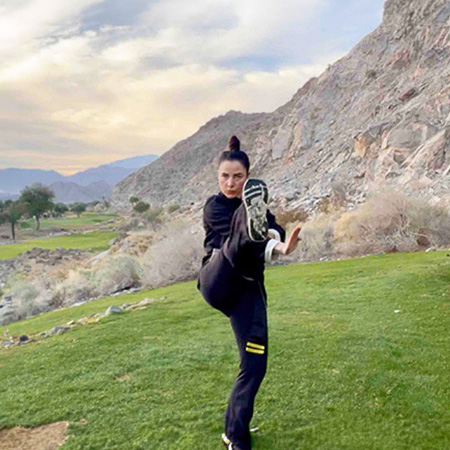
High kicks compromise balance. Keep them low and focus on staying upright on the supporting leg.
Practising fast too early
Speed covers up broken transitions. Earn speed by being correct slowly first. More in common beginner mistakes.
Safety notes
Clear the floor before you start, wear suitable footwear or train barefoot on a non-slip surface (see uniform and shoes), and warm up the knees and hips, because pivots and kicks load them. If you have knee, hip or balance problems, check with your doctor before practising turning and kicking, and keep a chair or wall within reach for balance at first.
Where to go next
Once Sil Lim Tao and Chum Kiu are both well established, the third form, Biu Jee, teaches what to do when structure is compromised. Chum Kiu's bridging also prepares you for the wooden dummy and for partner work. If you want structured feedback on your Chum Kiu, my online course includes graded video assessment at each level.
Frequently asked questions
What does Chum Kiu mean?
Chum Kiu means Seeking the Bridge, or Bridging the Gap. The bridge is the connection between you and an opponent, usually arm to arm. The form teaches how to make that contact, keep it, and recover it when it is lost.
When should I start practising Chum Kiu?
After your Sil Lim Tao foundation is solid: when basic structure, elbow energy and the foundational hand techniques are well established. Your instructor should decide. Starting too early is a common mistake that leads to structural problems.
How much space do I need for Chum Kiu?
Enough to step and turn freely in every direction the form travels, without furniture near your feet or hands. A clear patch of floor a few steps long and wide is usually enough. Check for slippery surfaces before you start.
Should Chum Kiu kicks be high?
No. Wing Chun kicks are low, direct and structurally grounded, aimed at targets such as the knee, shin and ankle. High kicks compromise balance. In solo practice, focus on staying balanced and upright rather than on height or power.
How often should I practise Chum Kiu?
Once it is part of your curriculum, two or three repetitions in most sessions works well, alongside your daily Sil Lim Tao. Keep the pace slow enough that you can check your structure through every turn and step.
Next: Biu Jee practice guide · partner drills · all lessons