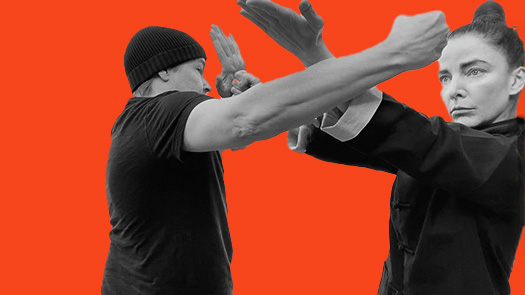
Philosophy you can feel
When I talk about Wing Chun philosophy, I am not asking you to memorise sayings. Every idea on this page shows up in your body first. You feel simplicity when a punch takes the shortest path. You feel balance when a push does not move you. You feel yielding when you stop fighting pressure and let it slide past. The philosophy is just a name for what the practice is already teaching you.
That is good news for beginners. You do not need to understand any of this before you start. If you train your forms and drills with attention, the ideas will arrive by themselves. Reading simply helps you notice them sooner.
1. Simplicity
Wing Chun is a compact system. It has a small number of empty-hand forms and a limited set of core techniques, and it keeps asking the same question: what is the least you need to do to solve this problem?
On the floor, simplicity means economy of motion. No wind-ups, no wasted steps, no movement that only looks good. A straight punch from the centerline reaches the target sooner than a big swing. A Pak Sao clears an incoming arm with a small, sharp movement rather than a large sweep. Every extra movement costs time, and time is what you cannot spare when someone is in front of you.
Simplicity is also a teaching principle. Because the system relies on a few principles rather than hundreds of separate techniques, understanding one idea well, such as the centerline, makes many applications obvious. That is why I keep sending students back to Wing Chun principles and centerline theory.
Simple is not the same as easy. A movement with nothing extra in it is hard to perform, because there is nowhere for a mistake to hide. That is why Sil Lim Tao is practised slowly for years.
2. Balance
Balance in Wing Chun starts with the literal kind: a stable, upright structure that can take pressure without toppling. In Traditional Wing Chun the feet are not turned in, and the stance is built so you can stay rooted and still move. You train this every time you stand in your stance during Sil Lim Tao.
It then becomes a balance of opposites. Relaxed but not limp. Firm but not stiff. One hand protecting while the other attacks. Wing Chun’s idea of simultaneous attack and defence is balance in action: instead of block, then hit, both happen together, and neither side of the body is wasted.
Over time, the same balance shows up in your temperament. You learn to stay calm and alert at the same time, which is a useful skill far outside the training hall.

3. The straight path
The shortest distance between two points is a straight line. Wing Chun builds on that simple fact: your straight punch travels along the centerline, the most direct route from you to your opponent’s centre. Direct paths are fast, hard to see coming, and efficient with energy.
Here is the nuance that beginners often miss. The straight path is about your line to the target, not about standing in front of an oncoming force. In Traditional Wing Chun we pick up our feet and step on angles to get off the line of attack, then strike straight from the new position. You stay direct without being a stationary target. My post on Wing Chun footwork explains the stepping, and the Wing Chun punch lesson covers the punch itself.
As a life principle, the straight path means saying what you mean and going directly to the real problem rather than circling around it. Direct, but not reckless.
4. Yielding and forward intent
These two ideas sound like opposites, and learning to hold them together is one of the great lessons of Wing Chun.
Yielding means you do not fight force with force. If a stronger push arrives, you do not brace against it and lose. You give way, turn, or redirect it, so the force passes you by. Techniques such as Tan Sao and Jum Sao are built around guiding energy rather than opposing it, and the turning in Chum Kiu teaches your whole body to do the same.
Forward intent means that even while you yield, your structure keeps a steady intention toward your partner’s centerline. You give way to the force, not to the person. The moment the pressure changes, you are already moving forward into the space it left.
In Chi Sao you feel this directly. Too much forward pressure and your partner can pull you off balance. Too little and they walk straight through you. The right amount is relaxed, constant and ready.
Try this: three drills for the ideas
- Simplicity check (5 minutes). Throw slow straight punches in front of a mirror. Watch for anything extra: a shoulder lift, an elbow flare, a pull-back before the punch. Remove one extra movement at a time.
- Balance test (with a partner, gently). Stand in your stance and have a partner apply a slow, steady push to your forearm. Notice whether you stiffen, lean or stay upright and relaxed. Swap roles. Keep the pressure light and stop if anything strains.
- Yield and return (with a partner, slowly). With forearms in light contact, your partner presses slowly toward your centre. Turn and redirect the pressure instead of bracing, then let your hand continue gently forward on the centerline as the pressure passes. Work at walking pace and agree on a stop word.
If you have a health condition or an injury, check with your doctor before partner work. More partner ideas are in partner drills.
5. Practice as character training
The longest lesson in Wing Chun is not a technique. It is the slow work of turning up, practising carefully and being honest about what you see. Practising the same form for years teaches patience. Filming yourself and correcting the same small fault teaches honesty. Training with a partner without trying to win teaches respect and control.
There is also a quieter effect. When you know you can protect yourself, you have less need to prove it. I often say that a true fight won is one that never started. Training builds the awareness and calm that make confrontation less likely, and it removes the urge to show off. I talked about this in my post on conflict, peace and Wing Chun, and it connects directly to the practical side covered in using Wing Chun for self-defense.
Ranks reflect this too. In Traditional Wing Chun a student is not moved forward until they have absorbed what the current level requires, and the higher ranks require teaching others, not only performing well. You can read how that works in Wing Chun ranks and levels.
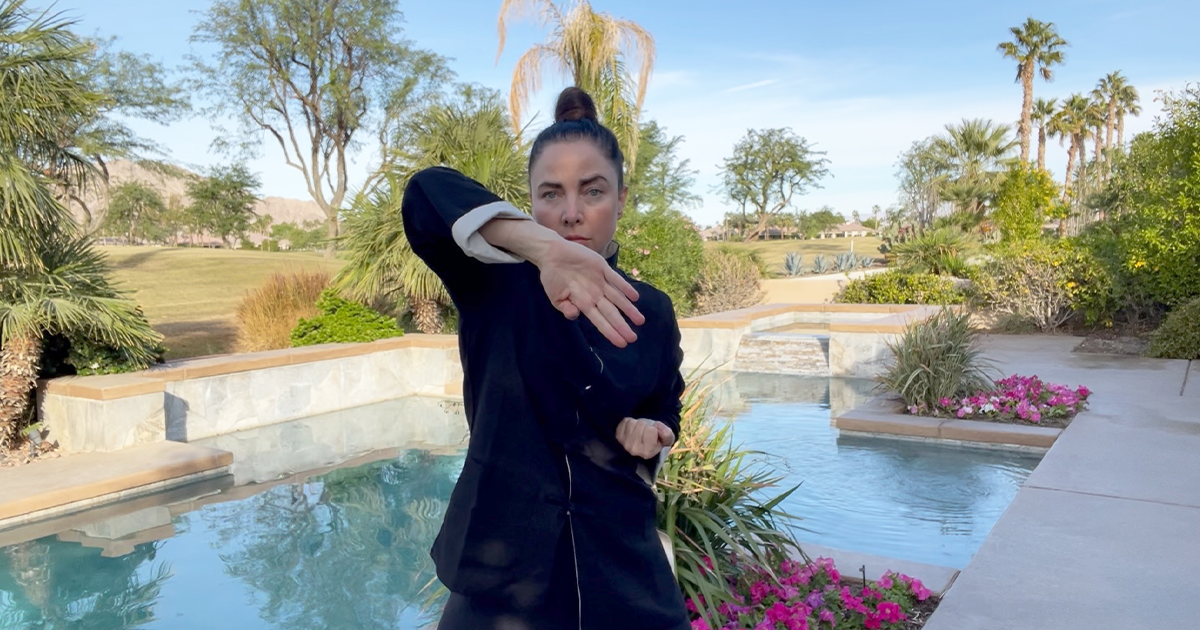
Bringing the ideas into daily practice
You do not need a special session for philosophy. Bring one idea into your normal training each week and pay attention to it:
- Simplicity week: cut every movement in your form down to what it actually needs.
- Balance week: check your stance and relaxation at the start, middle and end of every session.
- Straight path week: focus on your centerline and the shortest route for every strike.
- Yielding week: in any partner work, notice the moments you brace and practise turning instead.
- Character week: train every day, even briefly, and keep a short note of one thing you corrected.
The daily practice routine gives you a structure to hang these on, and the beginner mistakes lesson shows where the ideas most often go wrong.
Where these ideas came from
Wing Chun’s philosophy was not written down as a separate doctrine. It grew from generations of teachers passing on a practical system, from nineteenth-century Foshan to Ip Man’s Hong Kong and beyond. The legend of Yim Wing Chun, a smaller person overcoming a larger opponent through skill, captures the spirit even though it is a legend. The full story is in the history of Wing Chun.
If you want to read further, I explore these ideas at length in my The Way of Wing Chun philosophy series, which starts with the principles of the whole system and then looks at each form and weapon in turn. You can find the series on the books page.
Frequently asked questions
Is Wing Chun a philosophy or a fighting system?
It is a practical martial art first. The philosophy grows out of how it fights: simple, direct, balanced and efficient. Over years of training, those same ideas start to shape how you handle pressure, conflict and effort in everyday life.
What does the straight path mean in Wing Chun?
It means taking the shortest, most direct route to your goal, such as a straight punch along the centerline. It does not mean meeting force head-on. In Traditional Wing Chun we step on angles to get off the line of attack and then strike directly.
How can Wing Chun be soft and forward at the same time?
Yielding means not fighting force with force: you give way to pressure you cannot beat and redirect it. Forward intent means your structure keeps a steady intention toward the centerline. Together they let you stay relaxed without collapsing or retreating.
Do I need to study philosophy to learn Wing Chun?
No. You learn the philosophy mostly through the body, by practising forms and drills with attention. Reading helps you notice what you are training, but the practice comes first.
Does Wing Chun make people more aggressive?
Good training tends to do the opposite. As you become more capable and calm under pressure, you have less need to prove anything. Wing Chun values avoiding a fight when you can and ending a threat quickly when you cannot.
Next: Wing Chun principles · centerline theory · self-defense · all lessons