
Why history matters to a beginner
You do not need to know any history to throw a good straight punch. But knowing where Wing Chun came from helps you make sense of what you are training. It explains why the art is so compact, why it values economy over flourish, and why two schools can look quite different while sharing the same root.
The one habit I want you to build as you read is this: keep legend and documented history in separate boxes. Both are valuable. Only one of them is evidence.
The legend: Ng Mui and Yim Wing Chun
This is the story as it has been handed down in Wing Chun tradition. Please read it as a legend, because that is what it is. There are no historical records that confirm it.
The legend begins with the destruction of a Shaolin temple by the Qing government. A handful of masters, often called the Five Elders, are said to have escaped. One of them was Ng Mui, a Buddhist nun. In some versions she watched a fight between a crane and a snake and was inspired to create a new, economical way of fighting that did not depend on size or strength.
Ng Mui then met a young woman named Yim Wing Chun. A local bully was pressuring Yim Wing Chun to marry him. Ng Mui taught her the new method, and Yim Wing Chun defeated the bully in a challenge and was free to choose her own future. She later married Leung Bok Chau, who is said to have named the style after her. From there, the tradition says, the art passed through Leung Lan Kwai to performers of the Red Boat Opera.
Different families tell this story with different details, and some lineages have entirely different origin stories. I still teach it, because it captures something true: Wing Chun is designed so that a smaller person can deal with a larger one through structure, timing and angles.
Legend or history? Ng Mui, Yim Wing Chun, Leung Bok Chau and Leung Lan Kwai belong to the legend. Leung Jan, Chan Wah Shun, Leung Bik and Ip Man belong to documented history. Wong Wah Bo and Leung Yee Tai, the opera performers, sit on the line between the two: they are named as Leung Jan’s teachers, but we know very little about their lives.
The Red Boat Opera era
In nineteenth-century southern China, Cantonese opera troupes travelled the waterways of the Pearl River Delta on boats painted red, performing from town to town.
That world was hit hard in the 1850s. During the Red Turban revolt of 1854, one of the rebel leaders, Li Wenmao, was himself an opera performer, and he drew followers from the opera troupes. After the revolt was put down, public Cantonese opera was banned for years, and performers who had been linked to the rebels were hunted. It is easy to see why martial arts teachers from that background might have kept a low profile.
Wing Chun tradition names two Red Boat performers, Wong Wah Bo and Leung Yee Tai, as the men who passed the art to the first teacher we can document with confidence. Much of the colourful detail about secret rebels on the red boats was written down much later, so treat it with the same care as the Ng Mui story.
Leung Jan: the first documented teacher
Leung Jan is where Wing Chun’s documented history really begins. He lived in Foshan in the nineteenth century, where he practised traditional Chinese medicine and bone-setting at his family’s medical hall. He learned Wing Chun from Leung Yee Tai and Wong Wah Bo, and he became so respected for his skill that he was remembered as the “King of Wing Chun”.
Leung Jan taught a small circle of people, including his sons and a few close students. In his old age he returned to his home village of Gu Lao, in Heshan, and a shorter set of drills associated with that village is still taught in some schools today.
Chan Wah Shun: the money changer
One of Leung Jan’s best-known students was Chan Wah Shun, who earned his living changing money in Foshan and was nicknamed “Money Changer Wah”. Chan Wah Shun went on to teach his own small group of students in a rented ancestral hall.
His last student was a boy from a well-off Foshan family named Ip Man. After Chan Wah Shun suffered a stroke around 1909 and stopped teaching, his senior student Ng Chung So continued the boy’s training. This chain, Leung Jan to Chan Wah Shun to Ip Man, is the one most Wing Chun practised today grows from.
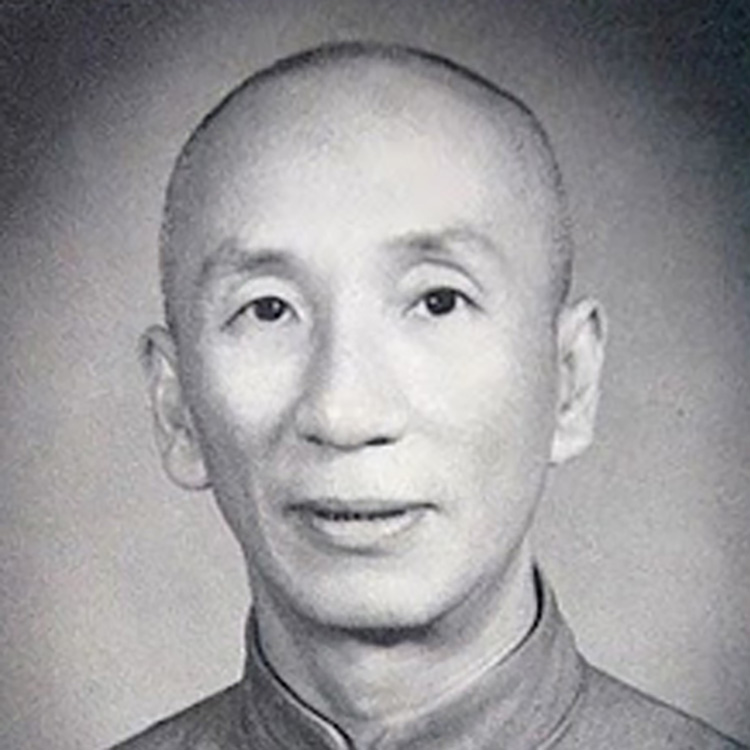
Ip Man in Foshan
Ip Man was born in Foshan in 1893. As a teenager he went to Hong Kong to study at St. Stephen’s College, and there he trained with Leung Bik, one of Leung Jan’s sons, until Leung Bik died in 1911. Back in Foshan, Ip Man worked as a police officer and taught Wing Chun privately to friends, colleagues and relatives. He did not run a public school there.
His full story is in Who Was Ip Man?. What matters here is that he carried the Foshan system, learned from two branches of Leung Jan’s teaching, into the city that would send it around the world. History also helps you choose a teacher, which is why I pair it with lineage.
Ip Man in Hong Kong
After the civil war, Ip Man left Foshan at the end of 1949 and arrived in Hong Kong in 1950. He had very little money. Through the Hong Kong Restaurant Workers’ Association he began teaching Wing Chun in the early 1950s, and for the first time the art was taught openly to anyone who came to train, rather than passed quietly within a family or a small group.
Over the next two decades he taught many students who became important teachers themselves, among them Leung Sheung, Wong Shun Leung, William Cheung, Moy Yat, Chu Shong Tin, Ho Kam Ming, his sons Ip Chun and Ip Ching, and a teenager named Bruce Lee. In 1967 Ip Man and some of his students founded the Ving Tsun Athletic Association in Hong Kong. Ip Man died in Hong Kong in 1972. My post Wing Chun masters of the world introduces several of these students.
How Wing Chun spread worldwide
Ip Man himself taught in Hong Kong. It was his students who carried Wing Chun abroad and shaped how it grew, and their own students then opened schools across Asia, Europe, Australia and North America. Three examples:
- Bruce Lee trained at Ip Man’s school as a teenager and left Hong Kong for the United States in 1959. His films in the 1960s and 1970s made millions of people curious about Chinese martial arts, and he always counted Wing Chun as part of his foundation. Read more in my post Did Ip Man teach Bruce Lee?
- Grandmaster William Cheung, who introduced Bruce Lee to Ip Man, later moved to Australia and taught there and internationally.
- Moy Yat moved to the United States and built a large teaching network there.
A new wave of interest came with the Ip Man films. Donnie Yen first played Ip Man in 2008, and the series that followed introduced the grandmaster to audiences who had never heard of him. If you enjoy the films, see the Ip Man movies ranked and the wider Wing Chun films guide, but remember they are dramatisations rather than documentaries.
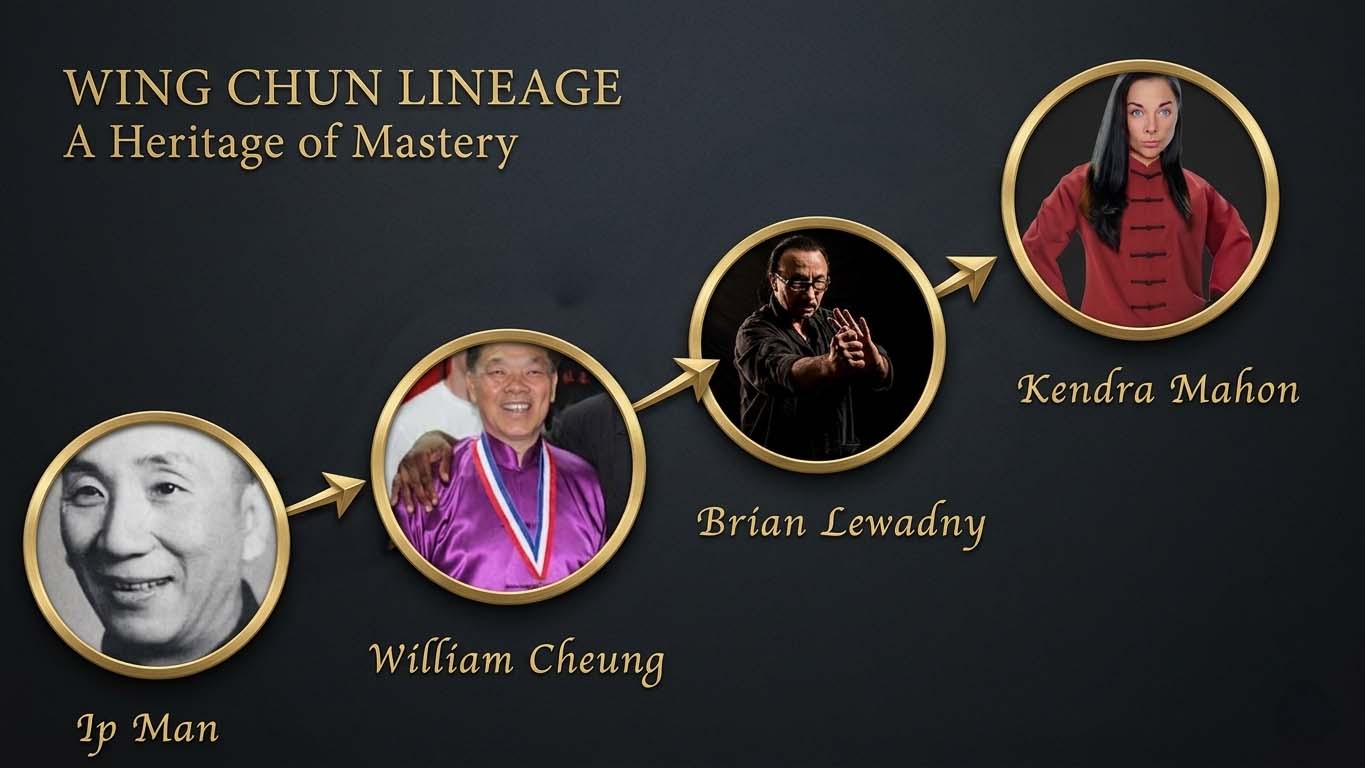
Two distinct lines from Ip Man’s teaching
Because Ip Man’s students each developed their teaching over decades, Wing Chun today has many branches, and you will most often meet two distinct lines: some schools teach mainstream Wing Chun, others teach Traditional Wing Chun, the line of Grandmaster William Cheung. You can see the difference most clearly in the footwork. In Traditional Wing Chun the feet are not turned in, and students pick up their feet and step on angles to get off the line of attack.
I teach Traditional Wing Chun as it was passed down to me by Master Brian Lewadny, who learned it from Grandmaster William Cheung. That makes me a 3rd generation Ip Man lineage teacher. Many sincere teachers in other lines carry Ip Man’s legacy too. For a side-by-side look, read Traditional Wing Chun vs mainstream Wing Chun and my post on why lineage matters.
Try this: map your own lineage
- Write down your teacher’s name, then ask who taught them and for how long.
- Keep going back, one generation at a time, until you reach Ip Man or another documented teacher.
- Mark each name as documented (you can find records or first-hand accounts) or traditional (passed down by word of mouth).
- Ask your teacher which line of Ip Man’s teaching your school follows, and what that means for your stance and footwork.
To compare schools, add the checklist in what makes a good Wing Chun course.
Where to go next
History makes the most sense when you connect it to what you train. The principles that the legend celebrates, structure over strength and the shortest path, are explained in Wing Chun principles and centerline theory. The ideas behind the art are in the philosophy of Wing Chun, and the first form, where all of it begins, is in the Sil Lim Tao practice guide.
If you want to go deeper, I wrote a full book on this subject, The History of Wing Chun: Legend, Lineage, and the Journey to the World, which follows the story from the legends through the documented teachers to the art’s spread around the globe. You will find it with my other titles on the books page.
Frequently asked questions
Who created Wing Chun?
Nobody knows for certain. Wing Chun tradition says the Buddhist nun Ng Mui created it and taught it to a young woman named Yim Wing Chun, whose name the style carries. That story is a legend. The first teachers we can document with confidence lived in Foshan in the nineteenth century, beginning with Leung Jan.
Was Yim Wing Chun a real person?
There is no historical record that confirms she existed. Her story is passed down as part of Wing Chun tradition, and it is worth knowing and telling, but it should be told as a legend rather than as documented history.
What was the Red Boat Opera?
Cantonese opera troupes in nineteenth-century southern China travelled the rivers of the Pearl River Delta on boats painted red. Wing Chun tradition places two of Leung Jan’s teachers, Wong Wah Bo and Leung Yee Tai, among these performers.
How did Wing Chun spread around the world?
Ip Man began teaching publicly in Hong Kong in the early 1950s. His students later taught in many countries, Bruce Lee’s films made Wing Chun famous in the 1960s and 1970s, and the Ip Man films starring Donnie Yen, beginning in 2008, introduced the art to a new generation.
Why do Wing Chun schools tell the history differently?
Wing Chun was passed on mostly by word of mouth, often privately, so different families and lineages preserved different versions of the early story. That is why a good teacher separates what is documented from what is tradition.
Next: Who was Ip Man? · ranks and levels · lineages · all lessons